

Link to original article on the New York Times
I asked if he ever talked about it. Jason shook his head no. Did they find out anyway? “Always.”
The first time was at Fort Benning in 1994, in the middle of the hell of basic training. The ex-cop recruits in boot camp with him said that prisoners had more freedom than they did. There were guys who faked suicide attempts to get out of basic. But Everman never had any doubts. “I was 100 percent,” he told me. “If I wasn’t, there was no way I’d get through it.”
He had three drill sergeants, two of whom were sadists. Thank God it was the easygoing one who saw it. He was reading a magazine, when he slowly looked up and stared at Everman. Then the sergeant walked over, pointing to a page in the magazine. “Is this you?” It was a photo of the biggest band in the world, Nirvana. Kurt Cobain had just killed himself, and this was a story about his suicide. Next to Cobain was the band’s onetime second guitarist. A guy with long, strawberry blond curls. “Is this you?”
Everman exhaled. “Yes, Drill Sergeant.”
And that was only half of it. Jason Everman has the unique distinction of being the guy who was kicked out of Nirvana and
Soundgarden, two rock bands that would sell roughly 100 million records
combined. At 26, he wasn’t just Pete Best, the guy the Beatles left
behind. He was Pete Best twice.
Then again, he wasn’t remotely. What Everman did afterward put him far outside the category of rock’n’roll footnote. He became an elite member of the U.S. Army Special Forces, one of those bearded guys riding around on horseback in Afghanistan fighting the Taliban.
I’ve known Jason Everman since we played rock shows together nearly 25 years ago. What happened to him was almost inexplicable, a cruel combination of good luck, bad luck and the kind of disappointment that would have overwhelmed me even at my most brashly defiant. After having not seen him since the early ’90s, I ended up hanging out with him in his apartment in Brooklyn last summer. We had drinks, retraced steps. We once were in the same place in our lives. But mine had since quietly transitioned from rock to parenthood. My changes were glacial. His were violent.
None of it is easy for him to talk about. Jason is one of the most guarded people I have ever met. But when I pulled up to his remote A-frame cabin near Puget Sound last winter, there he was, a sturdy, tall figure in a Black Flag sweatshirt holding a glass of red wine. This was his private place, and he was letting me into it.
Books and action figures covered one wall. Guitars and drums were
scattered on the floor. But the far wall almost looked like a memorial:
medals, artifacts, war photos. I took it all in, asking about a
hand-decorated gun on the fireplace. “That’s how the Taliban trick out
their weapons,” he said. Then I picked up his Army helmet. It seemed
heavy to me. “Dude, that’s light,” he said. “That’s state of the art.”
It had his blood type still written on the side: O positive.
The first time I met Everman was also the first time I ever stepped foot on a tour bus. It was 1989, which was a confusing time to be in a rock band. My band, Bullet LaVolta, had been on tour with the Seattle group we admired most, Mudhoney. They were role models to us. They didn’t just have a sense of the punk-rock rules of the day; they pretty much set them. Just as it does now, the grown-up economy seemed to have little use for 20-somethings like us. The mainstream music business didn’t, either. Our kind of punk rock was all about creating your own place, doing music for its own sake, usually the opposite of what was popular. If you wanted to “make it,” you played pandering cheese-metal like Warrant or Slaughter, the bands on MTV. They were bad. We were good. It was all so cut and dried.
The next-to-last show of our Mudhoney tour was in Chicago, where both bands were to open for Soundgarden at the Cabaret Metro, the biggest venue of the trip. Soundgarden was a much bigger deal in music circles than Nirvana at the time. As crazy as this may sound, Nirvana was a joke to all of us — a generic grunge band with a terrible name. Soundgarden had signed a big contract with A&M Records. People in the music business believed it was the one band that would break through. We didn’t know what to think. We were threatened, jealous, judgmental. As Dan Peters, Mudhoney’s drummer, remembered: “We were both showing up in vans, and they had a big old bus. It was weird.”
Soundgarden was the most professional rock operation I’d ever seen. They had a full crew, the full major-label push and 16 different T-shirts for sale. They also happened to be exceedingly nice, inviting us onto their bus. When the doors hissed open, we dropped silent in awe. It had a minifridge. A card table with a faux marble base. It had a bathroom.
We made it past the bunks to the lounge. And there he was:
Soundgarden’s bassist, Jason Everman. You couldn’t look more “rock dude”
than he did: all that hair, the dour expression. It was an imposing
energy to encounter in tubular mood lighting. And he was the first
person I ever met with a nose ring. At the time, I read it as a flashing
sign that said, “I will have unbearable attitude.” But he didn’t at
all. In fact, he was smart and had a dry wit. He offered me Funyuns.
The rest of that night was just as confusing. We went on so early that people were still arriving as we finished. Mudhoney was great but sounded strange in a cavernous room. And Soundgarden left us mystified. They seemed to have their eyes on a bigger prize, one we couldn’t see yet. As I watched Jason onstage — his rock hair pounding — it dawned on me: “My God, these guys are going to be rock stars.”
Everman was born on a remote Alaskan island. “My birth certificate says Kodiak, but I’m pretty sure it was Ouzinkie, where my parents lived in a two-room cabin with a pet ocelot named Kia.” That odd precision is how he talks. He’ll describe soldiers as “freemen, who, of their own volition,” are willing to “lose everything” or carefully explain the “epistemological dilemma” in Dr. Seuss’s “Horton Hears a Who!” And yet his thoughts still tend to be underlined with a distinctive “dude.” His parents, Diane and Jerry, moved to Alaska to get back to nature, but the marriage didn’t work out. Diane couldn’t take the harsh life, and after a couple of years she left Jerry and started over. She took Jason to Washington and eventually married a former Navy man named Russ Sieber. They settled in the Poulsbo area, across Puget Sound from Seattle. Jason’s mother never told him about the Alaska years. His half-sister, Mimi MacKay, with whom he grew up, said Jason didn’t know his real father existed until he was 13 or so.
Poulsbo, back then, was right on the edge of suburban safety. Though Diane adored Jason, growing up in their house wasn’t easy. “My mother was extremely depressed, an artistic genius who was also a pill-popping alcoholic,” Mimi told me. “Jason and I learned to walk on eggshells and really learned to take care of ourselves.” As a young boy, Jason went through a phase of stuttering. “My mom joked that this is how she cured Jason, by telling him, ‘Either spit it out or shut up,’ ” Mimi said. “I became really adept at finishing his sentences for him.”
Soon the silence evolved into acting out. He and a friend blew up a
toilet with an M-80. What might have landed a kid in jail today only got
him suspended for a week or two of junior high in the early ’80s.
Still, his grandmother Gigi was alarmed. Gigi Phillips was one of the
people Jason was closest to. And she wasn’t going to mess around with
this kind of trouble. She got the best therapist she could find, who
happened to be, Mimi was told, the sports psychiatrist to the Seattle
SuperSonics.
In therapy, Everman just sat there. But the doctor happened to be a music freak and had a few vintage guitars around the office. Everman picked one up. The therapist started to strum with him, hoping this would open Jason up. “It was a big family joke that those were the most expensive guitar lessons ever,” Mimi told me. That’s when Everman first started playing guitar.
Music changed everything for him, especially after he discovered punk rock. “I’d have to say that was the first defining event in my life,” he told me. “In punk there’s an extreme kind of conformity to all the nonconformity. You realize in all this rebellion that everyone’s doing the same thing. But in a weird way, that’s what kind of lets you eventually forget the rules, and you can be yourself.” During high school, Everman spent much of his free time playing in bands. In the summer after his junior year, he started visiting his biological father in Alaska, where he spent several seasons working on his fishing boat. He graduated a semester early, and soon he had earned $20,000 and a reputation for being self-sufficient.
It was then that he got the kind of break you read about in paperback rock biographies. Jason’s childhood friend Chad Channing happened to meet a guitarist and a bassist from Olympia looking for a drummer. They were Kurt Cobain and Krist Novoselic, and they called their band Nirvana. Channing played drums for many of their ramshackle early shows. When Cobain considered getting another guitar player, Channing piped up. “I was like: ‘I know this guy. This friend of mine, Jason.’ ”
At first, Everman seemed to be the perfect fit. These were irreverent guys who had all set off bombs in their own way. Nirvana’s gloominess is such a part of the band’s mythology now, but Cobain was also wickedly funny. As Novoselic put it to me, “We were fun-loving dudes.” Onstage, Nirvana had entered a heavy phase, perfectly suited to Everman’s rock vibes. Jonathan Poneman, co-founder of Sub Pop Records, the label that signed Nirvana, told me that Cobain introduced Everman as his “surprise” before a sound check in San Francisco. Poneman loved the new guy.
Everman also helped the band in another way. Nirvana owed money to the producer of their first album, “Bleach,” which they’d already recorded. “Jason was very generous,” Novoselic said. “And he’d had a job. . . . So he had, like, bucks, O.K.? You know how it said it was recorded for like six hundred and something bucks on the back of the record? Jason paid for that.” It was $606.17, which came out of Everman’s fishing money. Sub Pop thought so much of him that it printed a limited-edition live poster of Jason rocking out.
But it was when the band hit the road — piling into a cruddy van, as we all did — that it came undone for Everman and Nirvana. A tour is tough for anyone to handle, especially the first one. The days are 23 hours of stultifying boredom — all so you can have one hour onstage, one hour of visceral release that makes it worthwhile. Between the hangovers, the stink, the beaten-to-death inside jokes, touring can make anybody crazy. The key is to keep the van fun. The guy next to you may love you when you start, only to hate the way you keep asking him to turn the Stooges down 100 miles later. “We had some great shows with Jason,” Novoselic said. “But then things went south really fast.” Somewhere along the way, a cloud formed over Jason, an impenetrable inwardness that just hung there. They say he wouldn’t talk to anyone, completely removing himself from the circle.
By the time they made it to New York, “the fun stopped,” Novoselic remembered. “The fun stopped fast.” Channing was confused by it, too, and he was one of Everman’s oldest friends. “He doesn’t talk freely when things are bothering him,” Channing said. It just seemed as if he didn’t want to be there. Cobain and Novoselic wanted Everman out but didn’t know how to do it. That’s the inherent contradiction of punk-rock rules: you were supposed to hate careerism yet still have a career. And 20-year-old kids aren’t particularly good at sorting that out. So Nirvana didn’t actually fire Everman; the band canceled the rest of the tour and drove straight from New York to Washington State, 50 hours in silence. Hardly a word was spoken.
Even with more than 20 years of perspective, Everman still doesn’t have a clear answer for what went wrong. “To be honest, I never had any expectations about the gig,” he told me. “It just ended.” In “Come as You Are,” the definitive book on Nirvana, by Michael Azerrad, Cobain dismissed Everman as a “moody metalhead.” Even worse, he boasted about not paying Everman back for “Bleach,” claiming it was payment for “mental damages.” In Nirvana — a band with a lead singer so famously tortured that he would commit suicide — Jason Everman was kicked out for being a head case.
The timing for what happened next was baffling. After years of playing every lousy gig they could, Soundgarden had A&M Records behind them, a tour bus waiting, a full slate of tour dates booked. But Soundgarden’s bass player, Hiro Yamamoto, didn’t want anything to do with it. Their road manager, Eric Johnson, told me: “He really was just truly punk rock. There were meetings with A.&R. guys, and it was no longer dudes in a van. He was all like: ‘Oh, no, no, no. This isn’t for me.’ ” In 1989, just as their first major-label album, “Louder Than Love,” was released, Yamamoto abruptly quit the band.
Everman had always liked Nirvana, but he loved Soundgarden. Playing bass for them — on the verge of stardom as they were — was the most-coveted gig in Seattle — even one of Everman’s old friends, Ben Shepherd, auditioned. Soundgarden, meanwhile, had called Jason right away. “We knew things ended with Nirvana on less-than-ideal terms,” Kim Thayil, their guitarist, told me. “He didn’t fit with Nirvana? Big deal. That’s them. We’re Soundgarden. We’re a different animal.” In the first audition, he impressed them all. “Jason was the guy,” Soundgarden’s drummer, Matt Cameron, remembered. “Jason came prepared.” After the disaster with Nirvana, now Everman was playing bass for his favorite Seattle band. He couldn’t believe his luck. As he put it to me, “What were the chances of all that happening?”
The next year was a blur of touring throughout the United States and Europe. Only 22, Everman still felt behind. Everybody in the band was several years older than he was. “I was drinking water from a fire hose,” he said. “But I thought this was it. This was going to be my identity.” So did I. After that show in Chicago, Bullet LaVolta opened for Soundgarden for a month. And if I was initially judgmental about their ambitions, I realized it was more complicated after seeing it up close. There’s pressure when you’re supposed to be the next big thing. People believed it was going to work, too. In town after town, I watched bands fawn over Soundgarden, Everman included. He was who they all wanted to be.
When Soundgarden returned home, they called a band meeting. Jason showed up on Cameron’s porch thinking it was about the next record. Thayil told me, “I thought I would be diplomatic . . . and wasn’t getting to the point.” He said Chris Cornell, Soundgarden’s singer, finally cut to the chase: It wasn’t working out, Cornell said. Thayil remembers thinking: We’re not behaving like a band. I’m not happy. No one here is happy. No one’s talking to each other. Just like that, Everman was fired again.
When I heard the news, it made me worry for him. He’d been kicked out of a band with a bright future for a second time. There had to be a reason. Cameron kept wanting to say: “Hey, why so moody? You’re in a good band.” Johnson, the road manager, couldn’t figure it out: “He was funny and witty, and then a cloud would come over him. He would sit in the bus and be really mad with his headphones on all the time. I felt bad for the guy, and I feel even worse now, thinking about somehow he was suffering and nobody really knew how to address that.”
I don’t know how he got through the next year. Everman’s friend from home, Ben Shepherd, replaced him in Soundgarden. Their next album went double platinum. Of course, Nirvana — after replacing Jason’s friend Chad Channing on drums with Dave Grohl — became the biggest band in the world. That record he never got paid back for, “Bleach,” eventually sold 2.1 million copies. “Nevermind” sold nearly 30 million copies worldwide and changed the course of rock. Everman, meanwhile, was left behind with no idea what to do next.
For the first month, he just went fetal. “It was a huge blow,” he admitted to me quietly. “I had no warning. The only good thing about it was it made me leave the Pacific Northwest. I would never have done that otherwise.” He moved to New York and got a job working for a while in the Caroline Records warehouse, a long way from the tour bus.
Jason played with other bands, eventually joining one called Mindfunk. He actually had success with it, moving with the band to San Francisco, but something was still not right. Then in the midst of all the confusion in his life, he came to the realization that he had to make a change. He knew he didn’t just want to be a guy in his 15th band, the guy talking about his time in Nirvana and Soundgarden 20 years later. He wanted to do something, he said, something impossible. “I was in the cool bands,” he told me in the cabin. “I was psyched to do the most uncool thing you could possibly do.”
So in 1993, while living in a group house in San Francisco with the guys in Mindfunk, Everman slipped out to meet with recruiters; the Army offered a fast track to becoming a Ranger and perhaps eventually to the Special Forces. He told me he always had an interest in it. His stepfather was in the Navy; both grandfathers were ex-military. Most of the people he grew up with scoffed at that world, which was part of the appeal to him. Novoselic remembered something Everman said way back in the Olympia days. “He was just pondering. He asked me, ‘Do you ever think about what it’d be like to be in the military and go through that experience?’ And I was just like . . . no.”
Everman started waking up early while his bandmates slept in; he went biking, swimming, got in shape. One day, with zero warning, he resigned. He put all of his stuff in storage. He took a flight to New York and went to an Army recruiting office in Manhattan. A couple of weeks later he was on a flight to Georgia. “Was I nervous?” he asked. “I was a little nervous. But I knew.”
When he arrived for basic training at Fort Benning, his hair was cut, his nose ring was removed; he was as anonymous as every other recruit. At 26, he wasn’t an old-timer, but he was close to it. Training had been going on for about a month when Cobain committed suicide and Everman’s rock past was discovered, which gave more ammunition to the drill sergeants. There was a lot of “O.K., rock star, give me 50.” Everman insists he didn’t expect anything else.
A fellow soldier named Sean Walker told me that Ranger instructors begin by asking recruits to quit now to save time. “You had to pass a 12-mile road march in three hours or less,” Walker said, “run 5 miles in 40 minutes or less, complete the combat-swimmers test, as well as other evils the cadre decided to throw at you.” Half the recruits quit. But Everman refused to let himself be left behind this time. He completed every last requirement.
After Fort Benning, Everman was assigned to Fort Lewis, in Washington, 60 miles from where he grew up in Poulsbo. Everman’s Army buddies I spoke with said he never mentioned his past to anyone there either. Still, word got out. Walker thought the rumor of Everman being a rock star was a joke until someone showed him a VHS tape. “I had to watch the segment a few times just to make sure I was seeing correctly,” Walker said in an e-mail. “But it was Jason Everman playing some huge concert. I was wondering what the hell Jason was doing joining the Army when he was living the life most people could only dream about.” And he was doing it all less than an hour from Seattle’s Memorial Stadium, where Soundgarden was now playing.
During one of his first visits into Seattle, Everman happened to spot a familiar beat-up red van — it belonged to Kim Thayil from Soundgarden. Thayil saw Everman’s car tailing him, heard the honking but didn’t know who it was. “I wasn’t going to go home, that’s for sure,” Thayil said. He finally pulled over, and a guy with short hair got out of the car, saying, “Hey, Kim!” Thayil took him at first to be a superfan. “And then I heard: ‘It’s me. Jason.’ ” He was floored. They hung out, had a few beers. At night’s end, Everman went back to the base.
Everman’s first action as a Ranger was somewhere in Latin America, he said, an operation in the covert war on drugs, about which he declined to give details. Despite all the training, nobody knows for sure how he’ll react to the stress of combat. “The bond of locking shields with each other, working together to defeat a common enemy,” Everman told me in his typically formal manner, “it’s a heightened state.” It was kind of like being in a band onstage, he said, only more so. “Everyone looks around and you know — you know — something cool is going on here. I knew this was it. This is living.”
He served out his first enlistment as a Ranger. “But I felt like I wasn’t finished with something.” He still wanted to make Special Forces, which to Everman was the ultimate achievement. It’s a different world. They operate as a group of equals. They call one another by their first names. They engage in a wider spectrum of operations than less-elite units.
On Sept. 11, 2001, Everman was starting the last phase of Special Forces training. It was the first day of language school, and he was watching CNN in the common room with some buddies. “I saw the video of the plane impacting the tower and kind of innately knew we were going to war,” he said. “I don’t believe in fate or destiny, but I did feel a strange sense of kismet, which was probably more of just the right place at the right time. I guess I knew it was on, and I hoped that I would be prepared when it was time to go.”
He told me about riding horseback with the Pashtun, helicoptering in for midnight raids, sitting at a base for days at a time with absolutely nothing to do. Everman saw Soviet tanks rusting in the Panjshir Valley. He smelled the poppy fields outside of Kandahar. He encountered suicide bombers. Yet he always made a point to say fighting often isn’t what you think. “It’s not like the movies,” he stressed. “It’s slow, deliberate.”
Between Afghanistan deployments, Everman went to Iraq, and that, at times, was like a movie. He was in the front row of one of the biggest conventional military operations since World War II, with helicopters hovering on either side of his vehicle, “the full might of the U.S. forces,” as he puts it, in the column behind him. As he shot grenades from a Humvee, he recounted, “Iraqi tanks were exploding all around, turrets shooting off into the desert. I saw stuff I never thought I’d see. Buildings blew up in front of me, dude.” At one point, he came across a pile of Iraqi Army boots, hundreds of them. “Guys would just strip off everything they had on that said they were army and split.”
I wanted to know every detail, but he wouldn’t say much. Or couldn’t. There’s a code among Special Forces: they don’t talk about what they do. I actually think this was part of the appeal for Everman. After having such a public rock face, he went for something that wasn’t just anonymous; it was classified. Mimi once met a couple of Special Forces guys who idolized Jason. “They didn’t approach like the usual fanboys who asked, ‘Your brother was in Nirvana?’ ” she said. “No, they came to me like: ‘Jason Everman is your brother?’ ” One turned to the other and said, “Dude, do you know what that guy’s done?”
In the war, Everman seemed to have found his place. The cloud didn’t go anywhere; it just didn’t matter anymore. As one of his Special Forces colleagues (who is still on active duty and requested that his name not be published) told me: “He would get moody sometimes, but it didn’t interfere with the task at hand. I would rather work with somebody who is quiet than ran their suck constantly.” In Everman’s cabin, I saw medal after medal, including the coveted Combat Infantryman Badge. “Sounds kind of Boy Scouty,” he said. “But it’s actually something cool.” I saw photos of Everman in fatigues on a warship (“an antipiracy operation in Asia”). A shot of Everman with Donald Rumsfeld. Another with Gen. Stanley A. McChrystal. And that’s when it hit me. Jason Everman had finally become a rock star.
“The way I look at it, life is meaningless,” Everman said the last time I saw him. “The meaningfulness is what you impart to it.” The words sounded an awful lot like those of a philosophy undergrad, which is the latest iteration of Jason Everman’s life. He was talking about Jack Kerouac; he had to reread “On the Road” for one of his classes. We were standing in front of Butler Library on the Columbia University campus in New York. Everman looked rested and content, a backpack over his shoulder. After he left the military in 2006, he used the G.I. Bill to apply to two places: Seattle University and Columbia University. He says he threw Columbia in almost as a joke. General McChrystal wrote a letter of recommendation. To Everman’s shock, he was accepted. “It’s almost like a dare that went too far — and it keeps going.” At 45, he just received his bachelor’s degree in philosophy.
As we walked past all the oblivious college students, their whole lives ahead of them, I thought about how astonishingly few people do what Everman did. What happened to him was so brutal, seeing success pass him by — twice. But he didn’t let that misfortune define him. Of all the guys I knew through my years in rock, a precious few made it huge. Good for them. Most never came close. Some never managed to get past the failure of the dream, but it seems pretty clear that Everman did. When I told his former bandmates what he’d been up to, they all seemed genuinely thrilled with what he did with his life — and surely a little relieved.
As we made our way along what Columbia calls College Walk, I asked Everman what it was like to be a student after all he had been through. Everman smiled dryly. “It’s anonymous. Just the way I like it.” I suggested that his unique résumé might make him just about the coolest college professor of all time. “No way, man,” he said, shaking his head. “I don’t have the patience. I’ll probably just be a bartender somewhere.”
Clay Tarver is a screenwriter, director and musician. His last article for the magazine was about his secret life as a rock dad. He lives in Los Angeles. Editor: Wm. Ferguson
I asked if he ever talked about it. Jason shook his head no. Did they find out anyway? “Always.”
The first time was at Fort Benning in 1994, in the middle of the hell of basic training. The ex-cop recruits in boot camp with him said that prisoners had more freedom than they did. There were guys who faked suicide attempts to get out of basic. But Everman never had any doubts. “I was 100 percent,” he told me. “If I wasn’t, there was no way I’d get through it.”
He had three drill sergeants, two of whom were sadists. Thank God it was the easygoing one who saw it. He was reading a magazine, when he slowly looked up and stared at Everman. Then the sergeant walked over, pointing to a page in the magazine. “Is this you?” It was a photo of the biggest band in the world, Nirvana. Kurt Cobain had just killed himself, and this was a story about his suicide. Next to Cobain was the band’s onetime second guitarist. A guy with long, strawberry blond curls. “Is this you?”
Everman exhaled. “Yes, Drill Sergeant.”
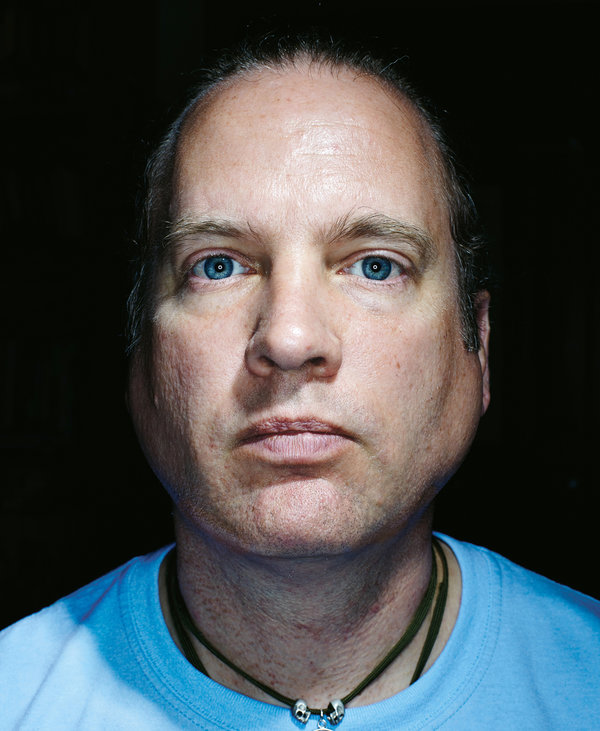 |
| Jason Everman Ian Allen for The New York Times |
Then again, he wasn’t remotely. What Everman did afterward put him far outside the category of rock’n’roll footnote. He became an elite member of the U.S. Army Special Forces, one of those bearded guys riding around on horseback in Afghanistan fighting the Taliban.
I’ve known Jason Everman since we played rock shows together nearly 25 years ago. What happened to him was almost inexplicable, a cruel combination of good luck, bad luck and the kind of disappointment that would have overwhelmed me even at my most brashly defiant. After having not seen him since the early ’90s, I ended up hanging out with him in his apartment in Brooklyn last summer. We had drinks, retraced steps. We once were in the same place in our lives. But mine had since quietly transitioned from rock to parenthood. My changes were glacial. His were violent.
None of it is easy for him to talk about. Jason is one of the most guarded people I have ever met. But when I pulled up to his remote A-frame cabin near Puget Sound last winter, there he was, a sturdy, tall figure in a Black Flag sweatshirt holding a glass of red wine. This was his private place, and he was letting me into it.
 |
| In July 1989, Jason Everman was a member of Nirvana. Ian Tilton |
The first time I met Everman was also the first time I ever stepped foot on a tour bus. It was 1989, which was a confusing time to be in a rock band. My band, Bullet LaVolta, had been on tour with the Seattle group we admired most, Mudhoney. They were role models to us. They didn’t just have a sense of the punk-rock rules of the day; they pretty much set them. Just as it does now, the grown-up economy seemed to have little use for 20-somethings like us. The mainstream music business didn’t, either. Our kind of punk rock was all about creating your own place, doing music for its own sake, usually the opposite of what was popular. If you wanted to “make it,” you played pandering cheese-metal like Warrant or Slaughter, the bands on MTV. They were bad. We were good. It was all so cut and dried.
The next-to-last show of our Mudhoney tour was in Chicago, where both bands were to open for Soundgarden at the Cabaret Metro, the biggest venue of the trip. Soundgarden was a much bigger deal in music circles than Nirvana at the time. As crazy as this may sound, Nirvana was a joke to all of us — a generic grunge band with a terrible name. Soundgarden had signed a big contract with A&M Records. People in the music business believed it was the one band that would break through. We didn’t know what to think. We were threatened, jealous, judgmental. As Dan Peters, Mudhoney’s drummer, remembered: “We were both showing up in vans, and they had a big old bus. It was weird.”
Soundgarden was the most professional rock operation I’d ever seen. They had a full crew, the full major-label push and 16 different T-shirts for sale. They also happened to be exceedingly nice, inviting us onto their bus. When the doors hissed open, we dropped silent in awe. It had a minifridge. A card table with a faux marble base. It had a bathroom.
 |
| By September 1989, he was in Soundgarden. By the next year, he was with neither. Joe Giron/Corbis |
The rest of that night was just as confusing. We went on so early that people were still arriving as we finished. Mudhoney was great but sounded strange in a cavernous room. And Soundgarden left us mystified. They seemed to have their eyes on a bigger prize, one we couldn’t see yet. As I watched Jason onstage — his rock hair pounding — it dawned on me: “My God, these guys are going to be rock stars.”
Everman was born on a remote Alaskan island. “My birth certificate says Kodiak, but I’m pretty sure it was Ouzinkie, where my parents lived in a two-room cabin with a pet ocelot named Kia.” That odd precision is how he talks. He’ll describe soldiers as “freemen, who, of their own volition,” are willing to “lose everything” or carefully explain the “epistemological dilemma” in Dr. Seuss’s “Horton Hears a Who!” And yet his thoughts still tend to be underlined with a distinctive “dude.” His parents, Diane and Jerry, moved to Alaska to get back to nature, but the marriage didn’t work out. Diane couldn’t take the harsh life, and after a couple of years she left Jerry and started over. She took Jason to Washington and eventually married a former Navy man named Russ Sieber. They settled in the Poulsbo area, across Puget Sound from Seattle. Jason’s mother never told him about the Alaska years. His half-sister, Mimi MacKay, with whom he grew up, said Jason didn’t know his real father existed until he was 13 or so.
Poulsbo, back then, was right on the edge of suburban safety. Though Diane adored Jason, growing up in their house wasn’t easy. “My mother was extremely depressed, an artistic genius who was also a pill-popping alcoholic,” Mimi told me. “Jason and I learned to walk on eggshells and really learned to take care of ourselves.” As a young boy, Jason went through a phase of stuttering. “My mom joked that this is how she cured Jason, by telling him, ‘Either spit it out or shut up,’ ” Mimi said. “I became really adept at finishing his sentences for him.”
 |
| Kunar Province, Afghanistan. Everman likens his experiences with the Army Rangers and Special Forces to those of being in a band. “It’s a heightened state,” he says. Photograph from Jason Everman |
In therapy, Everman just sat there. But the doctor happened to be a music freak and had a few vintage guitars around the office. Everman picked one up. The therapist started to strum with him, hoping this would open Jason up. “It was a big family joke that those were the most expensive guitar lessons ever,” Mimi told me. That’s when Everman first started playing guitar.
Music changed everything for him, especially after he discovered punk rock. “I’d have to say that was the first defining event in my life,” he told me. “In punk there’s an extreme kind of conformity to all the nonconformity. You realize in all this rebellion that everyone’s doing the same thing. But in a weird way, that’s what kind of lets you eventually forget the rules, and you can be yourself.” During high school, Everman spent much of his free time playing in bands. In the summer after his junior year, he started visiting his biological father in Alaska, where he spent several seasons working on his fishing boat. He graduated a semester early, and soon he had earned $20,000 and a reputation for being self-sufficient.
It was then that he got the kind of break you read about in paperback rock biographies. Jason’s childhood friend Chad Channing happened to meet a guitarist and a bassist from Olympia looking for a drummer. They were Kurt Cobain and Krist Novoselic, and they called their band Nirvana. Channing played drums for many of their ramshackle early shows. When Cobain considered getting another guitar player, Channing piped up. “I was like: ‘I know this guy. This friend of mine, Jason.’ ”
At first, Everman seemed to be the perfect fit. These were irreverent guys who had all set off bombs in their own way. Nirvana’s gloominess is such a part of the band’s mythology now, but Cobain was also wickedly funny. As Novoselic put it to me, “We were fun-loving dudes.” Onstage, Nirvana had entered a heavy phase, perfectly suited to Everman’s rock vibes. Jonathan Poneman, co-founder of Sub Pop Records, the label that signed Nirvana, told me that Cobain introduced Everman as his “surprise” before a sound check in San Francisco. Poneman loved the new guy.
Everman also helped the band in another way. Nirvana owed money to the producer of their first album, “Bleach,” which they’d already recorded. “Jason was very generous,” Novoselic said. “And he’d had a job. . . . So he had, like, bucks, O.K.? You know how it said it was recorded for like six hundred and something bucks on the back of the record? Jason paid for that.” It was $606.17, which came out of Everman’s fishing money. Sub Pop thought so much of him that it printed a limited-edition live poster of Jason rocking out.
But it was when the band hit the road — piling into a cruddy van, as we all did — that it came undone for Everman and Nirvana. A tour is tough for anyone to handle, especially the first one. The days are 23 hours of stultifying boredom — all so you can have one hour onstage, one hour of visceral release that makes it worthwhile. Between the hangovers, the stink, the beaten-to-death inside jokes, touring can make anybody crazy. The key is to keep the van fun. The guy next to you may love you when you start, only to hate the way you keep asking him to turn the Stooges down 100 miles later. “We had some great shows with Jason,” Novoselic said. “But then things went south really fast.” Somewhere along the way, a cloud formed over Jason, an impenetrable inwardness that just hung there. They say he wouldn’t talk to anyone, completely removing himself from the circle.
By the time they made it to New York, “the fun stopped,” Novoselic remembered. “The fun stopped fast.” Channing was confused by it, too, and he was one of Everman’s oldest friends. “He doesn’t talk freely when things are bothering him,” Channing said. It just seemed as if he didn’t want to be there. Cobain and Novoselic wanted Everman out but didn’t know how to do it. That’s the inherent contradiction of punk-rock rules: you were supposed to hate careerism yet still have a career. And 20-year-old kids aren’t particularly good at sorting that out. So Nirvana didn’t actually fire Everman; the band canceled the rest of the tour and drove straight from New York to Washington State, 50 hours in silence. Hardly a word was spoken.
Even with more than 20 years of perspective, Everman still doesn’t have a clear answer for what went wrong. “To be honest, I never had any expectations about the gig,” he told me. “It just ended.” In “Come as You Are,” the definitive book on Nirvana, by Michael Azerrad, Cobain dismissed Everman as a “moody metalhead.” Even worse, he boasted about not paying Everman back for “Bleach,” claiming it was payment for “mental damages.” In Nirvana — a band with a lead singer so famously tortured that he would commit suicide — Jason Everman was kicked out for being a head case.
The timing for what happened next was baffling. After years of playing every lousy gig they could, Soundgarden had A&M Records behind them, a tour bus waiting, a full slate of tour dates booked. But Soundgarden’s bass player, Hiro Yamamoto, didn’t want anything to do with it. Their road manager, Eric Johnson, told me: “He really was just truly punk rock. There were meetings with A.&R. guys, and it was no longer dudes in a van. He was all like: ‘Oh, no, no, no. This isn’t for me.’ ” In 1989, just as their first major-label album, “Louder Than Love,” was released, Yamamoto abruptly quit the band.
Everman had always liked Nirvana, but he loved Soundgarden. Playing bass for them — on the verge of stardom as they were — was the most-coveted gig in Seattle — even one of Everman’s old friends, Ben Shepherd, auditioned. Soundgarden, meanwhile, had called Jason right away. “We knew things ended with Nirvana on less-than-ideal terms,” Kim Thayil, their guitarist, told me. “He didn’t fit with Nirvana? Big deal. That’s them. We’re Soundgarden. We’re a different animal.” In the first audition, he impressed them all. “Jason was the guy,” Soundgarden’s drummer, Matt Cameron, remembered. “Jason came prepared.” After the disaster with Nirvana, now Everman was playing bass for his favorite Seattle band. He couldn’t believe his luck. As he put it to me, “What were the chances of all that happening?”
The next year was a blur of touring throughout the United States and Europe. Only 22, Everman still felt behind. Everybody in the band was several years older than he was. “I was drinking water from a fire hose,” he said. “But I thought this was it. This was going to be my identity.” So did I. After that show in Chicago, Bullet LaVolta opened for Soundgarden for a month. And if I was initially judgmental about their ambitions, I realized it was more complicated after seeing it up close. There’s pressure when you’re supposed to be the next big thing. People believed it was going to work, too. In town after town, I watched bands fawn over Soundgarden, Everman included. He was who they all wanted to be.
When Soundgarden returned home, they called a band meeting. Jason showed up on Cameron’s porch thinking it was about the next record. Thayil told me, “I thought I would be diplomatic . . . and wasn’t getting to the point.” He said Chris Cornell, Soundgarden’s singer, finally cut to the chase: It wasn’t working out, Cornell said. Thayil remembers thinking: We’re not behaving like a band. I’m not happy. No one here is happy. No one’s talking to each other. Just like that, Everman was fired again.
When I heard the news, it made me worry for him. He’d been kicked out of a band with a bright future for a second time. There had to be a reason. Cameron kept wanting to say: “Hey, why so moody? You’re in a good band.” Johnson, the road manager, couldn’t figure it out: “He was funny and witty, and then a cloud would come over him. He would sit in the bus and be really mad with his headphones on all the time. I felt bad for the guy, and I feel even worse now, thinking about somehow he was suffering and nobody really knew how to address that.”
I don’t know how he got through the next year. Everman’s friend from home, Ben Shepherd, replaced him in Soundgarden. Their next album went double platinum. Of course, Nirvana — after replacing Jason’s friend Chad Channing on drums with Dave Grohl — became the biggest band in the world. That record he never got paid back for, “Bleach,” eventually sold 2.1 million copies. “Nevermind” sold nearly 30 million copies worldwide and changed the course of rock. Everman, meanwhile, was left behind with no idea what to do next.
For the first month, he just went fetal. “It was a huge blow,” he admitted to me quietly. “I had no warning. The only good thing about it was it made me leave the Pacific Northwest. I would never have done that otherwise.” He moved to New York and got a job working for a while in the Caroline Records warehouse, a long way from the tour bus.
Jason played with other bands, eventually joining one called Mindfunk. He actually had success with it, moving with the band to San Francisco, but something was still not right. Then in the midst of all the confusion in his life, he came to the realization that he had to make a change. He knew he didn’t just want to be a guy in his 15th band, the guy talking about his time in Nirvana and Soundgarden 20 years later. He wanted to do something, he said, something impossible. “I was in the cool bands,” he told me in the cabin. “I was psyched to do the most uncool thing you could possibly do.”
So in 1993, while living in a group house in San Francisco with the guys in Mindfunk, Everman slipped out to meet with recruiters; the Army offered a fast track to becoming a Ranger and perhaps eventually to the Special Forces. He told me he always had an interest in it. His stepfather was in the Navy; both grandfathers were ex-military. Most of the people he grew up with scoffed at that world, which was part of the appeal to him. Novoselic remembered something Everman said way back in the Olympia days. “He was just pondering. He asked me, ‘Do you ever think about what it’d be like to be in the military and go through that experience?’ And I was just like . . . no.”
Everman started waking up early while his bandmates slept in; he went biking, swimming, got in shape. One day, with zero warning, he resigned. He put all of his stuff in storage. He took a flight to New York and went to an Army recruiting office in Manhattan. A couple of weeks later he was on a flight to Georgia. “Was I nervous?” he asked. “I was a little nervous. But I knew.”
When he arrived for basic training at Fort Benning, his hair was cut, his nose ring was removed; he was as anonymous as every other recruit. At 26, he wasn’t an old-timer, but he was close to it. Training had been going on for about a month when Cobain committed suicide and Everman’s rock past was discovered, which gave more ammunition to the drill sergeants. There was a lot of “O.K., rock star, give me 50.” Everman insists he didn’t expect anything else.
A fellow soldier named Sean Walker told me that Ranger instructors begin by asking recruits to quit now to save time. “You had to pass a 12-mile road march in three hours or less,” Walker said, “run 5 miles in 40 minutes or less, complete the combat-swimmers test, as well as other evils the cadre decided to throw at you.” Half the recruits quit. But Everman refused to let himself be left behind this time. He completed every last requirement.
After Fort Benning, Everman was assigned to Fort Lewis, in Washington, 60 miles from where he grew up in Poulsbo. Everman’s Army buddies I spoke with said he never mentioned his past to anyone there either. Still, word got out. Walker thought the rumor of Everman being a rock star was a joke until someone showed him a VHS tape. “I had to watch the segment a few times just to make sure I was seeing correctly,” Walker said in an e-mail. “But it was Jason Everman playing some huge concert. I was wondering what the hell Jason was doing joining the Army when he was living the life most people could only dream about.” And he was doing it all less than an hour from Seattle’s Memorial Stadium, where Soundgarden was now playing.
During one of his first visits into Seattle, Everman happened to spot a familiar beat-up red van — it belonged to Kim Thayil from Soundgarden. Thayil saw Everman’s car tailing him, heard the honking but didn’t know who it was. “I wasn’t going to go home, that’s for sure,” Thayil said. He finally pulled over, and a guy with short hair got out of the car, saying, “Hey, Kim!” Thayil took him at first to be a superfan. “And then I heard: ‘It’s me. Jason.’ ” He was floored. They hung out, had a few beers. At night’s end, Everman went back to the base.
Everman’s first action as a Ranger was somewhere in Latin America, he said, an operation in the covert war on drugs, about which he declined to give details. Despite all the training, nobody knows for sure how he’ll react to the stress of combat. “The bond of locking shields with each other, working together to defeat a common enemy,” Everman told me in his typically formal manner, “it’s a heightened state.” It was kind of like being in a band onstage, he said, only more so. “Everyone looks around and you know — you know — something cool is going on here. I knew this was it. This is living.”
He served out his first enlistment as a Ranger. “But I felt like I wasn’t finished with something.” He still wanted to make Special Forces, which to Everman was the ultimate achievement. It’s a different world. They operate as a group of equals. They call one another by their first names. They engage in a wider spectrum of operations than less-elite units.
On Sept. 11, 2001, Everman was starting the last phase of Special Forces training. It was the first day of language school, and he was watching CNN in the common room with some buddies. “I saw the video of the plane impacting the tower and kind of innately knew we were going to war,” he said. “I don’t believe in fate or destiny, but I did feel a strange sense of kismet, which was probably more of just the right place at the right time. I guess I knew it was on, and I hoped that I would be prepared when it was time to go.”
He told me about riding horseback with the Pashtun, helicoptering in for midnight raids, sitting at a base for days at a time with absolutely nothing to do. Everman saw Soviet tanks rusting in the Panjshir Valley. He smelled the poppy fields outside of Kandahar. He encountered suicide bombers. Yet he always made a point to say fighting often isn’t what you think. “It’s not like the movies,” he stressed. “It’s slow, deliberate.”
Between Afghanistan deployments, Everman went to Iraq, and that, at times, was like a movie. He was in the front row of one of the biggest conventional military operations since World War II, with helicopters hovering on either side of his vehicle, “the full might of the U.S. forces,” as he puts it, in the column behind him. As he shot grenades from a Humvee, he recounted, “Iraqi tanks were exploding all around, turrets shooting off into the desert. I saw stuff I never thought I’d see. Buildings blew up in front of me, dude.” At one point, he came across a pile of Iraqi Army boots, hundreds of them. “Guys would just strip off everything they had on that said they were army and split.”
I wanted to know every detail, but he wouldn’t say much. Or couldn’t. There’s a code among Special Forces: they don’t talk about what they do. I actually think this was part of the appeal for Everman. After having such a public rock face, he went for something that wasn’t just anonymous; it was classified. Mimi once met a couple of Special Forces guys who idolized Jason. “They didn’t approach like the usual fanboys who asked, ‘Your brother was in Nirvana?’ ” she said. “No, they came to me like: ‘Jason Everman is your brother?’ ” One turned to the other and said, “Dude, do you know what that guy’s done?”
In the war, Everman seemed to have found his place. The cloud didn’t go anywhere; it just didn’t matter anymore. As one of his Special Forces colleagues (who is still on active duty and requested that his name not be published) told me: “He would get moody sometimes, but it didn’t interfere with the task at hand. I would rather work with somebody who is quiet than ran their suck constantly.” In Everman’s cabin, I saw medal after medal, including the coveted Combat Infantryman Badge. “Sounds kind of Boy Scouty,” he said. “But it’s actually something cool.” I saw photos of Everman in fatigues on a warship (“an antipiracy operation in Asia”). A shot of Everman with Donald Rumsfeld. Another with Gen. Stanley A. McChrystal. And that’s when it hit me. Jason Everman had finally become a rock star.
“The way I look at it, life is meaningless,” Everman said the last time I saw him. “The meaningfulness is what you impart to it.” The words sounded an awful lot like those of a philosophy undergrad, which is the latest iteration of Jason Everman’s life. He was talking about Jack Kerouac; he had to reread “On the Road” for one of his classes. We were standing in front of Butler Library on the Columbia University campus in New York. Everman looked rested and content, a backpack over his shoulder. After he left the military in 2006, he used the G.I. Bill to apply to two places: Seattle University and Columbia University. He says he threw Columbia in almost as a joke. General McChrystal wrote a letter of recommendation. To Everman’s shock, he was accepted. “It’s almost like a dare that went too far — and it keeps going.” At 45, he just received his bachelor’s degree in philosophy.
As we walked past all the oblivious college students, their whole lives ahead of them, I thought about how astonishingly few people do what Everman did. What happened to him was so brutal, seeing success pass him by — twice. But he didn’t let that misfortune define him. Of all the guys I knew through my years in rock, a precious few made it huge. Good for them. Most never came close. Some never managed to get past the failure of the dream, but it seems pretty clear that Everman did. When I told his former bandmates what he’d been up to, they all seemed genuinely thrilled with what he did with his life — and surely a little relieved.
As we made our way along what Columbia calls College Walk, I asked Everman what it was like to be a student after all he had been through. Everman smiled dryly. “It’s anonymous. Just the way I like it.” I suggested that his unique résumé might make him just about the coolest college professor of all time. “No way, man,” he said, shaking his head. “I don’t have the patience. I’ll probably just be a bartender somewhere.”
Clay Tarver is a screenwriter, director and musician. His last article for the magazine was about his secret life as a rock dad. He lives in Los Angeles. Editor: Wm. Ferguson