Showing posts with label Sunday Valley. Show all posts

Wednesday, August 28, 2013

Sturgill Simpson On Playing The Grand Ole Opry, From Saving Country Music


I feel as if I was part of rare treat being able to see Sturgill Simpson a few years back in his older project Sunday Valley. Had never heard of the band but a few folks said to stick around and check them out. This was down in Texas during SXSW of 2011 and happened at a showcase put on by Keith of Hillgrass Bluebilly and Trigger of Saving Country Music. As soon as hit those first notes on the guitar and let loose a signature sound I was hooked. 

Now Sturgill has gone solo and stripped back on the guitar shredding and focused more on the craft of songwriting and is truly upping the ante. I sure as hell hope that he doesn't leave his amazing style of guitar picking in the dust as it is a breath of fresh air and a shot in the arm that brings country rock into a new light.

Check out the article on Saving Country Music

Sturgill Simpson, one of underground country music's best kept secrets
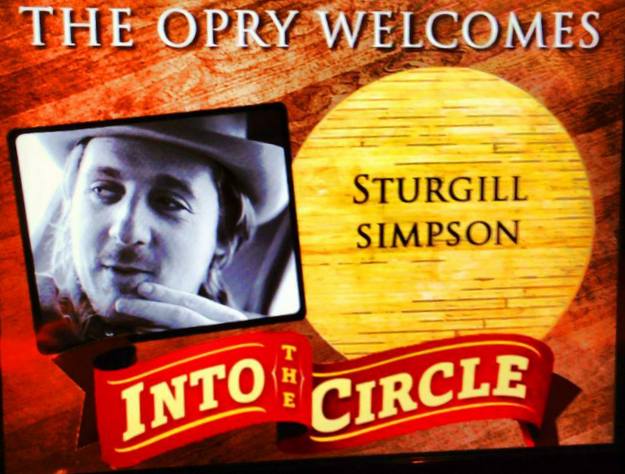
"But Sturgill’s Opry debut may have an even greater personal significance. To explain, here is Sturgill Simpson on his Opry debut, in his own words.
- – - – - – - – - -
I credit my 82 yr. old Grandfather Dood Fraley more than anyone on Earth for, among many other things, my musical education. He’s the greatest man I’ve ever known…Period. 

He used to sit me on the couch next to him when I was a child and make me watch Hee-Haw and TNN and tell me which performers were good and which ones were a joke or just holding the guitar as a prop. He spent his entire childhood growing up in Eastern Kentucky so poor it can’t be put into words. They had one radio in the coal camp that every one would gather around every Saturday night and listen to The Grand Ole Opry. He always talked about how The Opry was like magic coming out of that box. I know what it feels like hearing Bill Monroe for the first time on a cd player but it’s tough to imagine what it must have been like hearing that voice blast out of a radio in the 40′s as a nine year old boy. Anyway, he’s been really sick lately so when I got the news he was the first person I called…his words summed it up better than I ever could. 
 
He told me, “That’s it bud..that’s the biggest honor in Country music..that’s what you’ve been working so hard for all these years whether you knew it or not. If you never sing or record another note, you ain’t gotta prove nothing else to nobody after that. Don’t worry about what they’re doing now, just go do it your way and I’ll be right there with ya."

I made my album for him and no one else and it got me “here”…It aint much but “here” is a place I can go to sleep at night feeling pretty ok with. There is really nothing I can say that captures how proud I feel knowing he lived to see this and that he’ll be standing backstage watching his grandson step into that circle just like every single damn one of the heroes he raised me on has before me. There’s not a whole hell of a lot in this world I take seriously, least of all myself. But this I do,..The Opry is a living testament to the heritage of American Country Music and that’s about as serious as anything can be.

- – - – - – - – - – - – - – - – - – - – - – - – - – - – - -

You can listen to Sturgill Simpson’s Opry debut on WSM Online between 7 PM and 9:15 PM Central Friday (8-23).

Purchase Sturgill’s latest album High Top Mountain.
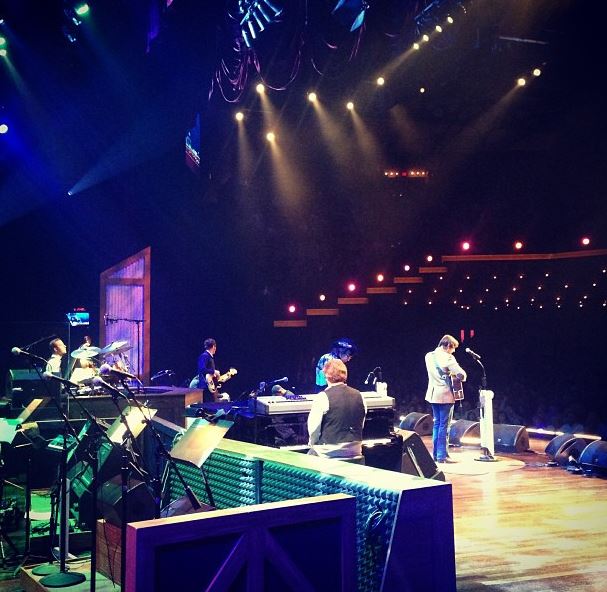
UPDATE (8/23): Sturgill played “Water I A Well” and “Life Ain’t Fair & The World Is Mean” on the Opry. For those that missed it, it will be archived in about a week or so here: 
Here’s a few pictures:
sturgill-simpson-grand-ole-opry
Picture from backstage:
sturgill-simpson-grand-ole-opry

Sturgill Simpson Tour Dates:

Sept. 1 – Rosemary Beach – Rosemary Beach, FL
Sept. 4 – The Altamont – Asheville, NC
Sept. 5 – Scenic City Roots – Chattanooga, TN
Sept. 6 – The New Vintage – Louisville
Sept. 7 – Barley’s Tap Room – Knoxville, TN
Sept. 8 – Eddie’s Attic – Atlanta
Sept. 9 – Georgia Theatre, Rooftop Series – Athens, GA
Sept. 11 – The Evening Muse – Charlotte
Sept. 12 – The Pour House Music Hall – Raleigh, NC
Sept. 19 – Americana Music Festival – Nashville
Sept. 21 – The Groove – Nashville
Sept. 26 – Red Dirt Dance Hall – Tulsa, OK
Sept. 27 – Wormy Dog Saloon – Oklahoma City
Sept. 28 – The Foundry – Dallas
Oct. 1 – The Western – Scottsdale, AZ
Oct. 3 – The Griffin – San Diego
Oct. 3 – The Hotel Cafe – Los Angeles
Oct. 5 – Hardly Strictly Bluegrass Festival – San Francisco
Oct. 30 – Music City Roots – Nashville

Wednesday, November 28, 2012

Why Underground Country Music Is Dying (A Treatise), Repost From Saving Country Music

Eric Church may sing about a country music Jesus coming to save us all, but what Triggerman speaks on in the article below, is tangible salvation of the music scene, we all enjoy. The underground country, roots rock and americana underbelly, is a vast and whole heartedly opinionated group of individuals, who get passionate, when asked about what defines the genre(s) as a whole. The mere notion of creating one true definition is a tough pill to swallow. As a group it's an amalgamation of all these disparate music tribes, which make the perfect gumbo stew. 

There is a not a music genre alive, that has not had similar growing pains from punk to metal to even hip hop. Read on with the great write up below and add your thoughts to the discussion thread on Saving Country Music.

Link to original post on Saving Country Music

"On Saturday November 17th, two of the most important acts in underground country played what very well could be their final shows. Th’ Legendary Shack Shakers, a band that was there at the very beginning of underground country and the revitalization of the lower Broadway in Nashville announced they are calling it quits after 16 years, at least for now, playing their final show at Nashville’s Mercy Lounge. Meanwhile in Covington, Kentucky, Unknown Hinson, one of underground country’s greatest ambassadors from his work on Cartoon Network’s Squidbillies, played his final show as a touring act after 17 years, saying he was done, “Period.”

Both these acts had their specific reasons for calling it quits, and certainly the door is open for them to return. And for JD Wilkes, the long-time front man of The Shack Shakers, he still has his Dirt Daubers routine which has apparently retooled to a more electric sound. But you add these huge, high-profile, highly-important artists leaving on top of bands like .357 String Band dissolving, Sunday Valley re-aligning, and Leroy Virgil losing all his original players in Hellbound Glory, and all of a sudden underground country feels like it’s fighting a war of attrition, and losing.


I have been struggling to write this article for almost two years, but have been putting it off because there’s some hard things to say, and I didn’t want to “talk down” a movement that was already trying to deal with pretty alarming trends. But I think that especially now, zooming out and trying to be honest and critical in a constructive way is important, because there is positively no doubt that underground country is dying, and has been for years.
Why? Here are some ideas.

An aging fan base and aging artists

There are exceptions of course, but if you look at who comprises the underground country movement, it is predominantly people in their 30′s, and people from lower incomes. And what do people do in their 30′s? They settle down, they get married and have kids, they get better and more stable jobs, they buy houses. This gives them less time to spend partying, hanging out on the internet talking about music, going to shows on weeknights. In your 30′s, instead of being able to hit every underground country show rolling through town, you have to pick that one show a month you want to attend and pay a babysitter.

The same goes for the artists making underground country music. As they age, their motivations to keep working at music that doesn’t seem to want to stick commercially begin to fade. Health concerns begin to become an issue, and not being able to afford health insurance is a real concern. This was one of the primary issues facing the Th’ Legendary Shack Shakers. Yearning for more stability is a recurring theme in the attrition underground country is facing in its talent roster, from banjo player Joe Huber of the .357 String Band, to drummer Chico from Hellbound Glory.

Something else worth noting is the large sect of sober people who make up underground country, in both the artist and fan ranks. Over time, some people must move away from the music and party scenes to find their sobriety, and others may just not identify any more with music that tends to have foundations in a party lifestyle.


Meanwhile the infusion of youth into underground country is anemic. There are some exceptions. The Boomswagglers from Texas and The Slaughter Daughters are promising, young bands, and artists like Lucky Tubb and Wayne Hancock have been integrating side musicians into the scene for some time. But they rarely stick, partly because of a general lack of support. Any younger musician if they’re smart doesn’t attempt to start their rise in underground country, which seems to be trending down and never had much long-term infrastructure to begin with. They look towards Americana, or the Texas/Red Dirt scene, or bluegrass, where the support is much easier to count on.

A Lack of Leadership

Since the beginning of underground country, if you looked at the top of the pyramid you saw Hank Williams III, and that is still the case in regards to records sales and concert tickets sold in any given year. But in 2008, Hank3 took over a year off from the road, and shortly after he started touring again, he stopped carrying opening bands. Then he put out a succession of albums of questionable quality, and all of a sudden a career on the rise has been stagnant for going on 5 years, and same goes for the the scene that revolves around it.


It was not Saving Country Music or Free Hank III, or even MySpace that comprised the first information portal about underground country. It was Hank3′s “Cussin’ Board” forum. And people didn’t go there just for Hank3 news, but news about all the underground country bands, with artists like JB Beverley and Rachel Brooke participating in the discussions regularly. These days, the “Cussin’ Board” feels like a ghost town compared to its vibrant past.

Shooter Jennings has stepped up in the last two years to attempt to fill the leadership vacuum left by Hank3, and has done some positive things and had some marginal success. But his polarization has kept him from completing the task of becoming a solid leader everyone can look up to. Similarly, where Hank3 was once the most unifying factor in underground country, his obvious step back from the “scene” has now made him a polarizing figure as well, questionably capable of taking back the reigns of underground country even if he was motivated to, and which he’s shown positively no signs of wanting to do. I can’t blame Hank3 for wanting to take a step back, because there were so many people wanting to take from him, believing his name was their stepping stone to success.

Leadership must come from the artists, and it must come from the music first, and that is Shooter Jennings’ inherent problem. This was illustrated when he cut the “Drinking Side of Country” duet with Bucky Covington, or on his industrial rock album Black Ribbons. Whether you like these Shooter projects or not, they illustrate his lack of consistency that has lead to his ineptness as a leader of underground country, and his acute polarization that reaches as far as Eric Church fans, and fans of his father. Hank3 never professed himself a leader. He led by example, and used causes like Reinstate Hank to lead the charge of taking country music back.

The Scene Has Replaced The Movement

Causes

One of the reasons an underground of country music was founded was from a wide ranging dissent about the direction of country music. This dissent is where the varying range of musical styles united, taking the country punk of Hank3, the neo-traditional approach of Wayne Hancock, the Texas/Outlaw country of Dale Watson, the bluegrass of the .357 String Band, the blues of Th’ Legendary Shack Shakers, and the Gothic country of Those Poor Bastards and piling them all together in the overall underground country movement. It was united by issues, like the reinstatement of Hank Williams to the Grand Ole Opry, the opening and extension of the Williams Family Exhibit at the Country Music Hall of Fame, the fight for creative freedom of artists from record labels, and the fight against the infiltration of pop on country radio.


Now these issues that defined, united, and energized the country music underground are seen as tired, if not counter-productive or annoying to many in the underground population. When issues arose with the sale of the Grand Ole Opry to Marriott International, or the changing of Billboard’s chart rules, the underground met them with apathy, if not anger at them being offered up as relevant to their music world. Issues are what made outreach possible for underground country, and now exclusivity seems to be what is yearned for by the majority of underground country fans. The “we have our music, screw the masses” attitude is what prevails, taking away one of the primary promotional tools for independent-minded underground ideals to reach out to other country music fans who also might be feeling disenfranchised with the mainstream.

Scenes and Cliques

Image and exclusivity seem to be the important dynamics in today’s country music underground, dragging on the commercial viability of the music, and making it hard for outsiders to integrate with the underground country culture. Though some on the outside looking in may enjoy the music, they may not understand the verbiage, anecdotes, and style that seem to be important with “fitting in” to the underground. So as long-time underground country fans taper off because of age, no new blood is there to take their place.

Facebook has also narrowed the perspectives of underground country fans, making them feel like how you present yourself is more important than what you do. An unhealthy culture of cloistered, inbred cross-promotion prevails through underground country, where small cliques of fans and bands have formed around labels, blogs, and podcasts, catering content to a select few.


These cliques promote each other within the clique, and at times may branch out farther to the “scene,” but rarely reach new blood because they are based on narrow perspectives and anecdotal experiences. It’s an “I’ll scratch your back, you scratch mine” culture where quality and creativity are lightly regarded compared to political importance in the scene. And if you don’t participate in this culture of narrow, ineffective promotion of the other people in the scene or clique, you risk being ostracized. Intention is measured over effectiveness. These cliques and their differences have also given rise to eternal conflict, with the bigger overall “Shooter fans vs. Hank3 fans” splitting underground country squarely in half.

Saving Country Music, and I specifically have at times enhanced or enabled unnecessary “scene” drama, and this has potentially affected the fate of underground country adversely. There are lot’s of entities in underground country and roots who attempt to promote music that seem to get lost in promoting their branding and merch first, and the music second. There are many general reasons underground country is dying, but the specific one is lack of money. Underground country is funded by the $40 hoodie, and this creates a paradox for the music that is supposed to be the focus.

Though there is lots of talk about shared responsibility for keeping underground music alive, and there’s many folks who re-post bulletins on Facebook, take pictures and videos of shows, run podcasts, or boutique “labels” attempting to make a difference in the music, the effect is confined to cliques and micro-scenes, and is more catered to serving the few and propagating image and branding.

For example the Pickathon Festival in Portland that caters to a wide variety of independent roots movements, including underground country, boasts over 300 volunteers annually. The Muddy Roots Festival, which almost exclusively caters to underground country and roots had roughly a dozen volunteers this last year, with multiple people who signed up to volunteer to get discounted or free tickets either not working their shifts, walking off their shifts, or generally being unhelpful. Pickathon’s issues with people sneaking onto the site are marginal. Muddy Roots’ issues of people sneaking on site without paying are major. The most helpful volunteers at the 2012 Muddy Roots were a representative from a hair gel sponsor, and the Voodoo Kings Car Club who have very few ties to the music.


There seems to be little understanding that if bands, labels, and festivals are going to continue to exist, there must be a shared sacrifice from the fans. And not just symbolic sacrifice, but substantive efforts to offer real support to the entities making the music happen. Without any corporate funding, that’s how an underground music movement works.

A Lack of Creativity

Underground country was founded on creativity. The creativity found on albums such as Hank3′s Straight to Hell, Wayne Hancock’s Thunderstorms & Neon Signs, Dale Watson’s Live in London, and Th’ Legendary Shack Shakers’ Cockadoodledon’t is what caused a country music underground to form in the first place. In the mid 2000′s, you could confidently say that the creativity in underground country outlasted that of the mainstream per capita. These days underground country is mired in trying to recapture that creativity, in a practice that lends to the aping of styles and the rehashing of themes. Capturing a “punk gone country,” “honky tonk Outlaw”, or “old-time” aesthetic seems more important than carving out a new creative niche like the originators of underground country did.
Meanwhile any true creativity existing in underground country quickly evolves beyond it to greener pastures in Texas country or Americana, like Justin Townes Earle did. The lack of infrastructure, the presence of scenesters, and the general disorganization of the underground dissuades talented artist from associating themselves with it. Americana, Red Dirt, Texas, and West Coast circuits offer much more hospitable and palatable scenes, while underground country generally discourages cross-pollination with these kindred, independent-minded movements, misunderstanding them as either mainstream, or too high-minded for the music they like.

The Positives

Europe

A step removed from the influence of the scene, Europe continues to thrive and grow their support for underground country. There seems to be more general thankfulness that underground country music exists in Europe, and a stronger focus on the music itself instead of the scene that surrounds it. There’s more support, more of a volunteering attitude, and more of a willingness to help make the music happen by the fans. Europe continues to be the most commercially-viable place for many underground country bands to tour and sell albums, and that support is continuing to grow.

A Few Breakout Bands

Bands like Larry & His Flask, Reverend Peyton’s Big Damn Band, and The Goddamn Gallows have found some decent success over the past few years playing on some bigger tours like The Warped Tour and opening for The Reverend Horton Heat. Bob Wayne has found traction in Europe and domestically being singed with label Century Media. Justin Townes Earle is now a big concert draw, and Scott Biram is getting his music played on television shows.

But many of these artists are moving on from the traditional underground country infrastructure to find their success, and others like Leroy Virgil and Sturgill Simpson still seem to be one step behind where their creative potential should be taking them commercially.

Festival & Touring Infrastructure

This is something underground country was lacking for years, and now has a healthy dose of. Unfortunately rising gas prices and dwindling crowds sometimes means it’s too little too late for some bands. The reason Unknown Hinson says he quit touring was because it was costing him too much money.

There are more festivals in all shapes and sizes catering to underground country and roots than ever before. But again, with a dwindling fan base, these different festivals are competing with each other for the same anemic and contracting population.

The Deep Blues

The Deep Blues seems to be on a more sustainable path, and also seems to be able to divest itself from the drama that is confounding underground country. However since it shares much of the same infrastructure as underground country, the issues in underground country can bleed over to the deep blues as well. There is better sustainability in Deep Blues, but the growth is still marginal. In many ways, the Deep Blues is the only thing keeping underground country alive, and that could hinder Deep Blues from moving forward as it drags underground country along.

What Can Be Done To Save Underground Country

To save underground country there must be a renewed interest in finding and developing younger bands, attracting younger fans, and focusing on talent and creativity over forming exclusive scenes. “Young” should not be mistaken for the same connotations it carries in mainstream country. Talent and creativity should still remain key, as well as trying to reach the folks that “get it.” But if underground country wants to continue to remain a viable part of the overall country music landscape, it must recruit new bands and new listeners to replace the natural contraction within its population.

Underground country must quit being so reactionary about the outside world. It must diversify. It must find common ground, common struggle, and common tastes with Americana, Red Dirt, and Texas music, and promote its best and brightest talent to those worlds and then reciprocate. It must stick to its founding principles of preserving the roots of the music and fighting for creative control for artists, and seize on the opportunities current events create to promote those principles to the rest of the music world, promoting the music of underground country by proxy.

It needs leadership, big bands, breakout albums and songs that breathe new fervor into the movement.

It needs and end to the “I got mine” mentality.

And it needs it now, before it ends up like Communism: a great idea whose devil is in the application."

Monday, April 23, 2012

“Go Ready” Bands in Country Music Right Now, from Saving Country Music

Triggerman over at Saving Country Music has a pure voice, when it comes to speaking his mind and backing up his words. He is a solid source of country music news, anecdotes and most of all a beacon in the night, when it comes to state of things in what we refer to as roots or underground country. 

Below is a mighty depiction of the bands that are ready to roll in the realm of country music. We all know this and these bands are the future, but many more folks need to hear about them so we can grow the genre with "Real Country Music" and not the watered down pop crap that fills radio stations nation wide.

Go out and see these bands live and help to support the future of country music.


"Hollywood seems obsessed with finding talent among the masses with their silly reality show contests like American Idol and The Voice, when in reality there’s a boatload of talent just sitting there waiting to be discovered right under their surgically-crafted, cosmetically-sculptured noses. But of course they don’t want to actually find any talent, because then what would they have to sell commercials for boner pills and high fructose corn syrup in the next season?

So here’s a list of some bands that are go ready, right now, no excuses. These are not fey, artsy acts, goat worshipers, or punk gone country screamo shows. These are performers that even using Music Row’s shallow approach to music, are marketable, young, hip, with hit-caliber songs ready for country radio, excellent live shows, and would immediately improve the quality and appeal of the genre.

This is just my list, admittedly short, so if you have another artist in mind, please use the comments section to share. And no, this is not about selling out stadiums, it is about creating financial sustainability for talented artists that deserve it.
- – - – - – - – - – - – - – - – - – - – - – - – -

Sunday Valley

If music was roulette and Sunday Valley were a square, I’d push my pile of chips and bet on them all in. Sturgill Simpson and the boys are in the studio as we speak making the “Album of their dreams” as Sturg puts it, that will include a guest appearance by Hargus “Pig” Robbins among others, just announced as a 2012 inductee to the Country Music Hall of Fame. But what puts this band over the top is their live performance that harkens back to how one must have felt when Hendrix or Stevie Ray Vaughn took the stage before their break: an unbelievable, dynamic, jaw-dropping experience that leaves you awe-stricken from the combination of originality and sheer talent. Buy your Sunday Valley stock now and watch it rise.

“2012 will be the year of Sunday Valley”. –that’s my quote.

- – - – - – - – - – - – - – - – - – - – - – - – -

Hellbound Glory

Hellbound Glory stock has been slowly rising over the last few years, but is still nowhere near where it needs to be. Leroy Virgil is like the Chris LeDoux and Keith Whitley of our time all wrapped up into one. The sideways smile, the legendary-caliber songwriting, there’s no excuses why Hellbound Glory shouldn’t be selling out mid-sized venues and making a fair living playing the type of country music that country music needs. At the least Music Row is a fool for not poaching the Hellbound Glory discography and Leroy Virgil’s brain for his songwriting gold to slot with their already established artists. Every day that goes by that Hellbound Glory remains mired in the underground is another day that country music isn’t putting its best foot forward, and is not making the best case of why it is an important, relevant genre.

- – - – - – - – - – - – - – - – - – - – - – - – -

Turnpike Troubadours

One of the best bands to see live, and Red Dirt DJ’s will tell you songs like “Every Girl” are great for radio. They have a new album coming out on May 8th called Goodbye Normal Street, and let’s hope this is the one that puts them over the top, and past the boundaries of the Texoma corridor. Unlike some of the other artists on this list who find themselves in their mid 30′s, where it feels like the window could be closing for them in the coming years, the Troubadour’s window feels like it is just opening. Potential has always been one of their best assets. Now it’s time for that potential to be cashed in for solid growth and success.

- – - – - – - – - – - – - – - – - – - – - – - – -

Whitey Morgan & The 78′s

When the question is posed of who is gonna fill the shoes of the true Outlaws and honky-tonkers, from the ones passed on like Waylon and Paycheck, to the ones going gray like Dale Watson and Marty Stuart, trust me, the answer is not going to be Justin Moore. Whitey Morgan & Co. are the true connection, the current torch bearers of the ballsy, twang-heavy true country sound that would expose all the pop country laundry list fluff from the first listen if only given a chance. Similar to how Bloodshot Records label mate Justin Townes Earle has popped in the last few years, now it is Whitey’s turn. Dues have been been paid. Now it’s time to cash in.

Young Up-And-Comers to Keep an Eye On

Paige Anderson

Paige Anderson’s ceiling is limitless. Amazing voice with natural pitch and control, and a highly skilled flat-picking guitar player, there’s nothing naturally holding Paige back. And as one of the young leaders in West Coast bluegrass circuits, and the leader of her family’s band “Anderson Family Bluegrass”, she’s shown the ambition and drive an artist needs in this competitive music environment. Young, beautiful, talented, there’s no excuses here, Paige Anderson is ripe to capture America’s heart.

Wyatt Maxwell

Another heartthrob and superpicker bound for great heights and who started out in a family band, Mad Max & The Wild Ones. A natural leader, he’s been out before paying dues by playing lead guitar for the legendary Wayne “The Train” Hancock and can slide into just about any band or vintage style of music and make it shine. The look and technique are all there, but what puts Wyatt into elite company is his sense of style and taste. As a guitar player or as a band leader, the sky is the limit for young Maxwell.

- – - – - – - – - – - – - – - – - – - – - – - – -
Another name I must mention is Ruby Jane, who will unmistakably be huge in music someday, so unmistakably in fact it doesn’t even seem germane to put her on this list. She has moved more into the jazz and singer/songwriter world in recent months and years after her time touring with Willie Nelson and Asleep At The Wheel, but is still a name all lovers of great music should keep up with.

Also the beautiful and talented Rachel Brooke may be a little fey for the wide masses, but her voice and talent is nonetheless undeniable. Just like how Emmylou Harris was the hottest commodity in female harmony singers to put on your album for so many years, Rachel could fulfill this role with the pain in her voice and such mastery of taste and control, while exposing her great original songs to the greater world."