Showing posts with label Radio. Show all posts

Saturday, July 23, 2016

Hank Williams: The Lighter Side of The Godfather of Country

Williams lived fast and died young but in 1951 he was able to do radio broadcasts at 7.15am, where the wisecracking improvisor showed his mastery of music.

Hank Williams: more than just a tortured soul. Photograph: Supplied
By now you’d think we know everything there is to know about Hank Williams. He had a short life, dying New Year’s Day 1953 aged 29 in the back of a car parked at a gas station in rural Virginia. Three years earlier he had made his debut on the Grand Ole Opry, launching a body of work that would serve as one of the definitive blueprints of modern country music. A definitive box set in 1998 claimed to house every note Williams sang.
Not so fast. This month marks the reissue of a 15-CD set called The Complete Mother’s Best Collection ... Plus! unveiling 142 lost performances by the country music star in an unvarnished setting as the featured performer of an early morning radio program in 1951. The recordings, rescued from acetates salvaged in the 1970s and the center of a 10-year legal battle, contradict the image of a doomed and self-destructive country singer known for harrowing fare like I’m So Lonesome I Could Cry, Your Cheatin’ Heart, and I’ll Never Get Out of This World Alive.

Monday, March 14, 2016

Crosley Radio Unveils Rolling Record Store And New Record Pressing Plant

Crosley Radio Unveils Rolling Record Store And New Record Pressing Plant
Kudos goes out to Crosley Radio for not only helping to cement the foundation for vinyl records to explode back into popularity through their economically priced record players, but for also continually re-investing into music culture. From an article below and reposted the Insider Louisville, Crosley has created a rolling music store that will surely be popping up at music festivals far and wide to help promote their small stereos along with their new vinyl pressing plant. Great things are happening in Louisville and we are damn proud that are go to video guy and label hombre Mike Thompson, also runs their video department. Rusty Knuckles and Crosley Radio have some solid things cookin'!

Thursday, May 14, 2015

Motobunny Debuts at No. 9 On The FMQB SubModern Singles

Motobunny Debuts at No. 9 On The FMQB SubModern Singles

Motobunny Debuts at No. 9 On The FMQB SubModern Singles and at No. 11 on the FMQB SubModern Album Charts! Coming out of the gates swinging!

Here are the current stations adding Motobunny to their playlists:

KROQ/LA (Apocalypse, Let's)
KPNT/St. Louis
KDHX/St. Louis--new
WBJB/Monmouth-Ocean--new
WLKK/Buffalo
KRZQ/Reno--new!
KACV/Amarillo--new
KXRN/Long Beach--new
WPNH/Plymouth--new
WNLF/Macomb--new
KOSU/Oklahoma City-Tulsa

Saturday, January 24, 2015

Black Eyed Vermillion and Motobunny Have Featured Songs On The White Trash & Whiskey Bent Show On Real Punk Radio Network

Black Eyed Vermillion and Motobunny Have Featured Songs On The White Trash & Whiskey Bent Show On Real Punk Radio Network
Sick of terrestrial radio and need a dose of punk infused rock n' roll? Look no further than Real Punk Radio to help quell those sentiments and to get a solid dose of great tunes streaming to your magic box. Huge thanks to Jason Vapor over at the Whiskey Bent show for including new tracks from Rusty Knuckles very own Black Eyed Vermillion and Motobunny, alongside of the GodDamn Gallows, Off!, Nashville Pussy, Zeke, the Dwarves, Cutthroat Shamrock and many more.


Sunday, September 8, 2013

Curious About How To Fix Anything, Take It Apart

There are many days when I feel fortunate to have been brought up in a household that valued hard work, over just buying new things. It is not as if we had a choice, money didn't grow on trees and there weren't other options. This also means that we were taught to fix everything. 

It is easy to complain about many items now being unfixable and that may be partially true, as a plethora of products are built for planned obsolescence. The unfortunate aspect to this sort of mass production of junk, is that it creates an entirely disposable culture and we lose a sense of value in craftsmanship. 

Why take care of a new product when it will only be phased out in a year or two and won't allow for updates from the cloud? We all have been part of this with an item such as a cell phone. Recently though I got laughing on how some products are built to be workhorses. I have one of the first versions of the ipod Shuffle from 2005 and I have been using it for workouts since. Bravo to Apple for keeping it simple and useful, but will it last for over 20 years, well that is highly doubtful.

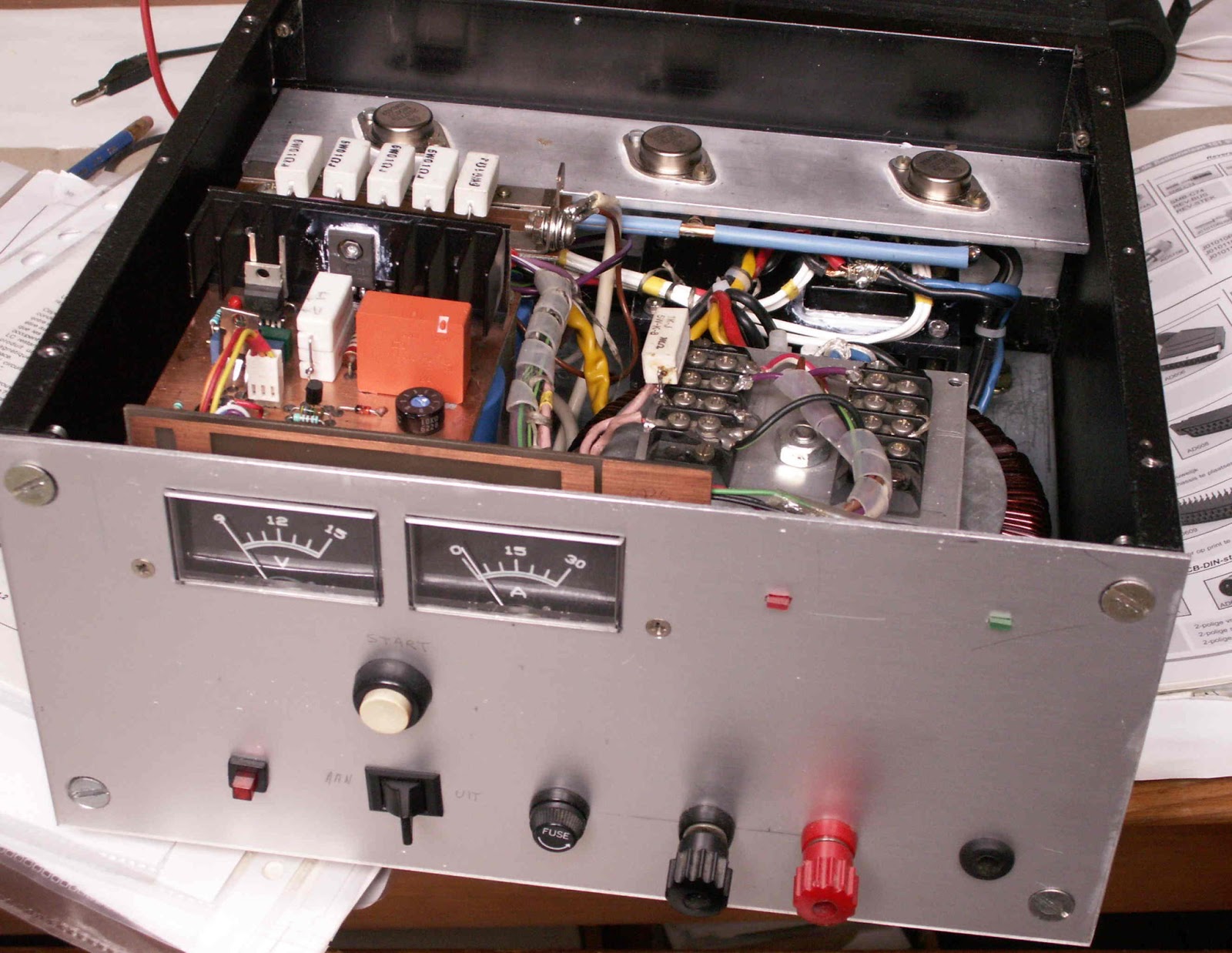
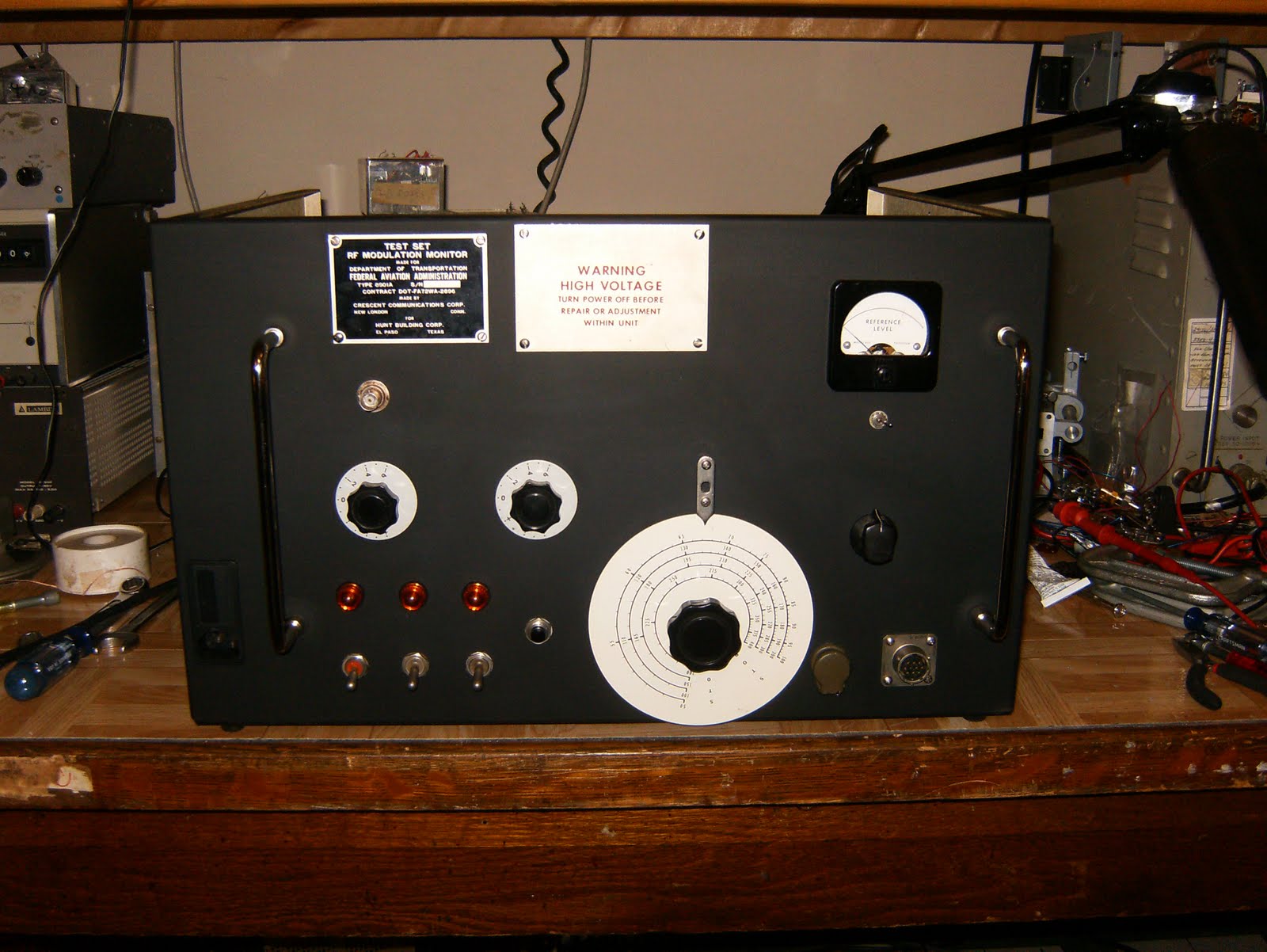
A while back was hanging out at the folk's house and decided that I needed to check what was in the attic. The old toys had long been gone, but I was after some of Chief's old gadgets as he gifted me the fixit gene. In the garage attic I stumbled upon some really cool old items that had a lot of character and after pulling them apart you could see how well they were built. The soldering was done with heavier gauge wire, the metals were stout and overall the gadgetry still functioned in it's mechanical state.  

Many times I hear complaints from all sorts of folks that they have no concept how to fix anything. Take it from a life time tinkerer, just explore and let it be an adventure. Imagine what you are taking apart is just one big puzzle. If you fail to put it back together correctly, keep working at it until there are no parts left. Try to imagine how each piece works and in the process you will be teaching yourself mechanical aptitude, elementary physics, circuitry and a host of other skills. 

"What is a scientist after all? It is a curious man looking through a keyhole, the keyhole of nature, trying to know what's going on." - Jacques Cousteau


Toshiba Transistor Radio Model 7TP - 352S, 100 Megawatts
Burroughs Portable Adding Machine from my grandfathers feed and grain warehouse business
Burroughs Portable Adding Machine push button numbers


Burroughs Portable Adding Machine push button numbers from my grandfathers feed and grain warehouse business
Old liquor bottle
Early 1950's Chevy AM Radio
Yep old car radios were tube amps
Tube amp in an old 1950's Chevy radio

Wednesday, April 3, 2013

Reno Divorce's New Album, Being Added To More Rock Stations Daily

It is a damn good feeling to know that Reno Divorce's new album is still being added to new stations far and wide on their new playlists. We can't thank these stations enough for continued airplay. The fellas will be starting a south eastern tour in a few weeks so look for them in your town.

Purchase your copy of the album 

Hang out with Reno Divorce on Facebook

X 107.5 - KXTE-FM - Las Vegas, NV
Planet 100.1 - WPNH - Plymouth, NH
HGRNJ - New Jersey
FM 90 - KACV - Amarillo, TX
Rock 92 - KFMA -  Tucson, AZ
91.7 - KOTO Telluride, CO
Area 93.3 - KTCL - Denver, CO
91.5 - KKUP - Santa Rosa, CA
101.1 - WRIF - Detroit, MI
The Penguin Rocks - Belmar, NJ
97.5 - WHFS - Baltimore, MD
96.1 - WKZQ - Myrtle Beach, SC
95.9 - WNLF - Macomb, IL


Reno Divorce south eastern spring 2013 tour

Sunday, March 31, 2013

The New Power Brand In Music, What For It... Radio

 
Can't live without our radio, nor can the masses for music discovery


With so many different channels for discovering and listening to music and, with massive generational shifts under way, it's impossible to tell what the music business will look like even in the short-term.


FORTUNE -- Nielsen's "Music360" survey of consumers shows an industry in chaos, with no clear idea of what music distribution will look like in five years, let alone 10.

The Internet, of course, will be the primary means by which most people discover new music. But it's impossible to know through which channels that discovery will take place. While lots of adults still discover new music through traditional radio, 64% of teenagers cite YouTube (GOOG) as their primary source for listening to music. This despite the growth of services like Pandora (P) and Spotify. The difference between adults and teenagers is stark. Only 7% of all 3,000 respondents say their primary music channel is YouTube. A big change is under way.

At the same time, even teenagers, surprisingly enough, are still buying CDs: a third of them said they bought at least one CD in the past year. And half of all teens say they listen to music on CDs at least sometimes. Clearly, that doesn't mean CDs still have a future, but it shows that at least some teenagers (most of whom have never known a world without online music) are willing to shell out for music when they really like it.

The survey shows that, for now, traditional radio is still a major source of music discovery, with 48% of respondents -- more than with any other medium -- saying that's where they discover most of their new music. Also surprisingly, the difference in perceived "value" between digital music and CDs is rather narrow. Nearly two-thirds of all respondents (including adults) say digital music is a good value. But 55% of them say the same thing about CDs.

The popularity of YouTube as a music channel should give some pause to those who believe mobile music apps are the wave of the future. Apparently, many teenagers seem to think YouTube is easy enough to use and to find the tunes their friends are talking about -- or that they heard on the car radio on the way home from school.


The new power brand in music is youtube

The following is a small sampling of insights included in the Music 360 report:

Radio is still the dominant way people discover music

48% discover music most often through the radio
10% discover music most often through friends/relatives
7% discover music most often through YouTube

More teens listen to music through YouTube than through any other source

64% of teens listen to music through YouTube
56% of teens listen to music on the radio
53% of teens listen to music through iTunes
50% of teens listen to music on CD

Positive recommendations from a friend are most likely to influence purchase decisions

54% are more likely to make a purchase based off a positive recommendation from a friend
25% are more likely to make a purchase based off a music blog/chat rooms
12% are more likely to make a purchase based off an endorsement from a brand
8% of all respondents share music on social networking sites, while 6% upload music.

Music player apps are most prevalent, followed by radio and music store apps

54% have music player apps on their smartphones
47% have radio apps on their smartphones
26% have music store apps on their smartphones

Males purchase rock music most often, while females prefer top 40

38% of males purchase rock most often
15% of females (compared to 9% of males) purchase top 40 most often

Digital music is seen as a slightly better value than a physical CD

63% of purchasers identified digital albums as a very or fairly good value
61% identified digital tracks as a very or fairly good value
55% identified physical CDs as a very or fairly good value

Younger consumers who do buy digital tracks, are more likely to purchase new music immediately after its release

33% of teens purchased a digital track within one week of release
21% of persons 18+ purchased a digital track within one week of release
36% of teens have bought a CD in the last year; 51% of teens have purchased some kind of music download

18-24 year olds are most likely to attend a music event (among those who attend any type of live event)

7% attending once a week or more
30% attending once a month

Although 18-24 year olds attend more live events, teens are more likely to purchase T-shirts and posters while there.

54% (compared to 46% of 18-24 year olds) of teen attendees purchase concert tees
14% (compared to 7% of 18-24 year olds) of teen attendees purchase concert posters

Listeners enjoy hearing movie soundtracks over music related TV shows or video games

42% enjoy hearing music via music related TV show
59% enjoy hearing music via movie soundtracks
28% enjoy hearing music via music related video games

Older consumers have decreased their spending the most during the current economy

• 41% of respondents 55+ reduced their spending to a large degree
39% of respondents 45-54 reduced their spending to a large degree

• Only 28% of respondents age 25-34 reduced their spending to a large degree

Data for Music 360 were collected via 3,000 online consumer surveys using Nielsen’s proprietary, high-quality ePanel in the United States. Topics addressed in this study include: where/when music is consumed, through which device(s), apps and services; digital vs. physical purchases; the process of discovery, and how/when discovery converts to purchase; insights around spending, share of wallet, and retailer preferences; live events; and much more.

Sunday, January 20, 2013

DIY Radio, Open Source Communication For The Masses

Should light, sound and air cost anything? Do they not inhabit all that is around us on the planet earth? Surely they do. Why shouldn't communications across the airwaves, be accessible to anyone? I and many others, feel as if they should be, but major corporations with paid advertising, tend to think property of the airwaves belongs to them.

Ever wonder why terrestrial radio sucks so bad, except for the patch work of college stations all over the country? Playlists are created, then become syndicated to groups of stations, beholden to the same corporate share holders. These vanilla stations rely on all the elements working together to never provoke or ask questions. With advertising dollars building the walls and playlists, there is no true voice, nor chance of music outside of the "safe" realm being heard.

While recently working on a project with a vendor of ours, we heard the same loop three times in under four hours, from the local top 40 station. The music being played was not our forté, but I could understand why someone would dig the melodies for the casual listener. It was pure candy and devoid of any filling. The music had the depth of a water puddle, but it served a purpose, to entertain.

Having a voice and being an individual is something everyone should strive for. Dare to be different and dare to break new ground. Copying what everyone else does, surely doesn't make for a great story and ultimately it shows lack of vision. We applaud folks such as Stephen Dunifer, for fighting the good fight and creating a voice free of constraint.

Learn all about Free Radio Berkeley

Free Radio Berkeley a community based FM station, started in 1993 by Stephen Dunifer


How To Make a Radio Station from Free Radio on Vimeo.


a brief history of Free Radio Berkeley from seth gadsden on Vimeo.


"Founded on April 11, 1993 as a Free Speech voice challenging the regulatory structure and power of the Federal Communications Commission (FCC), Free Radio Berkeley has been engaged in an ongoing legal battle with the FCC. Until it was silenced by a court injunction in June 1998, Free Radio Berkeley was broadcasting 24 hours a day, 7 days a week at 104.1 FM with 50 watts of power as the alternative voice for the greater Berkeley/Oakland area. The original Free Speech mission to provide community news, discussions and interviews, information, a wide range of music, and more has now been taken up by Berkeley Liberation Radio.

Free Radio Berkeley was instrumental in helping to to create an ever growing micropower broadcasting movement to liberate the airwaves and break the corporate broadcast media's stranglehold on the free flow of news, information, ideas, cultural and artistic creativity. This movement, by creating an ungovernable situation for the FCC, forced this regulatory body to establish a very limited low power FM broadcast service (LPFM). Viewed by many within the micropower community as a form of damage control and a divide and conquer strategy, this LPFM service only allows the establishment of low power stations in rural communities due to overly stringent channel spacing requirements. Even given the limited nature of LPFM it was immediately opposed by both the National Association of Broadcasters and National Public Radio. As a result of intense lobbying efforts by both these organizations Congress passed a bill that severely curtailed an already limited service. The National Lawyers Guild Committee on Democratic Communications responded to the initial LPFM rule making proceedings and is currently assisting with the LPFM application process. 


DIY ham radio custom made to broadcast the airwaves
Following the example of Free Radio Berkeley, hundreds of micropower broadcast stations have taken to the air across the United States and in other countries as well. Current FCC regulations mandate a minimum broadcast power of 100 watts for non-LPFM stations and require such a high cost of entry so that only the rich and well endowed can have a voice. Micropower broadcasting is helping to restore grassroots democracy, bringing back the concept of open and free civic discourse among all citizens. Further, it is a direct challenge to a broadcast system based entirely on wealth. A micropower FM broadcast station with a coverage radius of 12-15 miles can be put on the air for a cost ranging from $1000-$2000. An affordable amount for any community desiring to have a voice. Most of our transmitters can operate directly from car batteries, thereby allowing the setting up of portable stations operating at strike lines, rallies, demonstrations, community events and fairs, and festivals. Drive-by radio!

Free Radio Berkeley has two somewhat distinct entities - Free Radio Berkeley 104.1 FM, a silenced broadcast station that was operating with 100 volunteer programmers, and - Free Radio Berkeley IRATE (International Radio Action Training, Education), which provides transmitter kits, technical support and training and is involved in national and international outreach and organizing efforts. Our transmitters and other related equipment are being used by popular liberation struggle movements in a number of countries.


On this site you will find information on Free Radio Berkeley. Our web storefront is also available offering the latest in micropower broadcasting kits, accessories, complete station packages, audio equipment and antennas. Also, check out the Micropower Broadcasting section containing information and links to help you start your own community micropower radio station." 


AutoDesk PC chassis box has new found life as a chassis for radio broadcasting, from Mr. Vacuum Tube

Thursday, December 6, 2012

Can Clear Channel Really Compete On A Digital Level and Have Variety Within Their Playlists?

Clear Channel will always care more about their money belt than promoting real music stations
Pandora is slowing in it's stock price and the sharks are swarming, on what might be the next hottest commodity for streaming music, to be comparable to a service such as Spotify. Clear Channel's has dropped their fangs and are now plunging into digital music with their acquisition of executive media talent. One good aspect might be the ability of new bands to gain a bigger audience, on a mass level. 

If Clear Channel is making a serious push to become a contender in the digital streaming music market, will they still have the limited playlists, akin to their terrestrial stations? Also, after looking at reviews on Amazon, will iHeartRadio continue to force you to login to facebook with the app? Thank you, to the college and small market radio stations for being one of the last frontiers for promoting new music on FM stations and keeping regional music alive and kicking. 

Read the original article below on AdWeek


Can Clear Channel's iHeartRadio really compete with Spotify and Sirius XM?
"Clear Channel’s streaming service iHeartRadio is turning up the volume in an aggressive bid to take on red-hot Spotify and Pandora.

Over the past six months, Clear Channel’s digital service has recruited a slew of media execs, including president Tim Castelli (veteran of AOL and Google) and svp of marketing Holly Lang from Condé Nast. In July, longtime Microsoft veteran Rick Song was named evp of national digital sales. Song has been on a hiring spree of his own, tapping sales execs for Chicago and Los Angeles.


“Now that we have a leadership team, we are in the process of building our organization over the next six months,” said Song, who also pointed to Clear Channel’s artist relationships as a key competitive advantage. He cited September’s second annual iHeartRadio Festival in Las Vegas, featuring Taylor Swift and Green Day.


Clear Channel definitely has pushed its way into the digital music mosh pit. IHeartRadio’s app, which streams 1,500 terrestrial radio stations, along with digital stations and 15 million on-demand songs, is gaining traction. Since launching on Facebook last year, it’s attracted 20 million registered users and 5 million fans, said Song. The mobile app has been downloaded 135 million times since its launch four years ago. IHeartRadio also powers Yahoo Music’s radio service, which streamed the iHeartRadio Festival and continues to show highlight clips.


It all sounds impressive. But Pandora still commands 70 percent of the Web radio market and 6.6 percent of the total U.S. radio audience, per Triton Media, while Spotify this month scored a staggering $100 million from Coca-Cola in new funding.


While the competition is intensifying, the economics remain questionable for all. Unlike terrestrial stations, music-streaming companies pay exorbitant royalty fees to artists (which is why Clear Channel and Pandora are jointly lobbying Congress to pass a more favorable law). Also, the ad market is still paltry, and agencies don’t know what to do with Internet radio or how to value it. “The whole industry is struggling with this,” said Maribeth Papuga, evp of direct local activation at MediaVest. “You know people are using it. But you have to justify it.”


Clear Channel at least knows how to sell to radio buyers, she said. But interestingly, the company has positioned iHeartRadio as a national radio buy, as Pandora makes a regional push. “What we’ve been good at is being a local company,” said Song. “Now we’re going out there and saying, ‘What is the power of our total reach and audience?’”


Having a bigger sales team will help. But what iHeartRadio really needs is more listeners. “Once they gain scale, they’ll be poised to gain market share,” said Lydia Foy, managing director of local audio, Horizon Media."

Tuesday, September 18, 2012

Billy Don Burns Is A Featured Artist On Air Play Direct

So let's get this straight, you are a radio DJ and you want to spin new music compared to the set list that corporate sponsors want you to play. We totally understand your mindset and have just the songwriter and one helluva great individual in Billy Don Burns ready to unleash his music upon the world. All of you folks spinning records world wide, get over to AirPlayDirect.com and download Billy Don's music and get his music to the masses.

Link to Billy Don Burns music on AirPlayDirect.com

Billy Don Burns is a featured artist on AirPlay Direct

Tuesday, August 7, 2012

KCRW’s Slick New System Lets Indie Bands Submit Their Own Tunes, Repost From Mashable.com

There are numerous ideas far and wide about how to get your music heard and we are just now finding out about another outlet called MALCOLM. We think its a clever idea in that it's on KCRW, Los Angeles public radio, but will there be enough bandwidth from their end to even listen to all the music? Surely they will be flooded with responses, but for a business that is funded by public donation, do they have enough resources?. Hopefully if KCRW's DJs can become taste makers to a much broader online audience, MALCOLM could really have a shot at working. 

Here is your challenge large corporate FM stations, take a clue from KCRW and give the listening audience what they want to hear instead of the same old programs day in and day out. Also, two great bands first submitted their music to KCRW and played to audience reaching half a million listeners. Beck and Fitz & The Tantrums are proof positive it works.


Malcolm from KCRW - NPR Los Angeles, California. A new program to solicit music to a public radio station
"KCRW, an NPR affiliate station and Los Angeles indie music mainstay, introduced on Tuesday a new digital music submission system that will help independent artists make their way onto public radio. 

The new-and-improved MALCOLM, as the station affectionately calls its internal record filing system, offers artists the chance to create profiles that include a bio, photo, social media links and three of their best tracks. Artists can then designate which DJs and/or shows their tracks are best suited for and receive notifications when a KCRW DJ has commented or rated their music.

KCRW prides itself on being one of the few radio stations that still accepts and listens to demos and unsolicited music. It’s what has long rendered the station a tastemaking hub for up-and-coming musicians and their fans. KCRW’s flagship program Morning Becomes Eclectic has been on the air for over 30 years. KCRW DJs have introduced listeners to such artists as Florence + the Machine, Coldplay, Massive Attack and Norah Jones. 

As a gracious and ardent supporter of independent musicians in Los Angeles and beyond, KCRW hopes that MALCOLM will just make it easier to get great new music out to its listeners.

“Independent artists are more important than ever and we want to champion as many as we can, yet the volume of submissions we receive has grown exponentially, said Anne Litt, Music Program Director. “We were asking ourselves how we can better serve these musicians and we came up with MALCOLM. It’s fast, easy and allows KCRW to do what we do best — support and share artist’s work.” 

Currently in beta mode, the digital system is going to be a major asset to DJs just as it will be to independent artists. Instead of passing physical CDs down the hallway, MALCOLM will function as an internal network for sharing music in a way that is both more efficient and environmentally friendly.

“[MALCOLM] will help us discover great new music faster,” said KCRW DJ and Music Librarian Eric J Lawrence. “KCRW has been instrumental in helping start the careers of a wide range of musicians, from Beck to more recent bands such as Fitz and the Tantrums and Quadron. In many cases, the music was sent to us out of the blue and we pledge to continue this tradition by listening to as many submissions as possible.” 

Los Angeles-based readers can check out KCRW on 89.9FM. The station broadcasts internationally at KCRW.com. Both music and news programs are also available on the station’s smartphone apps for the iPhone, Android and Blackberry."


Wednesday, February 29, 2012

KNCY Country - Digs Jay Berndt And Hellbound Glory

We are damn stoked to be working with such a station as KNCY Country in Nebraska City, Nebraska and especially their morning DJ and Program Director Patrick Monaghan. In a time when its hard as hell to cut through the clutter, getting the bands we work with to be heard on the airwaves is an uphill battle. Progressive stations such as KNCY are putting artists such as Hellbound Glory and Jay Berndt in steady rotation and proving that great Country and Americana doesn't have to come from Nashville. Thanks to Patrick for believing in the music and playing great acts that are helping to shape the airwaves.

Patrick Monaghan, morning DJ and Program Director of KNCY Country, Nebraska City, NE
If you are a college station, mainstream radio, blogger or podcaster, we are glad to get our music out to ya in any format needed for promotion. The bands we work with are breaking through the clutter, but we need the fans help, to open many more doors which will fill clubs far and wide. Become active and help to promote quality music. Get in touch and we would dig talking with those interested in helping out with our upcoming street team. Whether it be bands in the punk or country genre, Rusty Knuckles is about true grit, get in touch.

ralph.knuckles at gmail.com

Hellbound Glory © Juan Two Three photography 2011


Jay Berndt in his studio in Providence, Rhode Island


Tuesday, October 25, 2011

The History of Recorded Music, Feature From Popular Science Magazine

We would like to thank the fine publication of Popular Science for being in existence and for growing up reading their sister magazine, Popular Mechanics. Between those two magazines, they have been a well of inspiration unlike any other, well besides Thrasher. We would love to lay claim to a few music and motorcycle mags, but they tend to drift with the tides and none have had as lasting an impact on us as the aforementioned periodicals.

These type of magazines have a solid voice and carry through for generations as they are focused on a plethora of topics but always reign in their subject matter. For example, just found this article over on Popular Science about the History of Recorded Music. If yall have any interest in technology mixed with popular culture, you couldn't pick a better topic to research. As technology morphs and changes certain aspects of life are always at the forefront. Music is continually pushing technology as it is a universal language and one in which the creators and listeners are actively evolving together. 

Music to us comes in many forms. Whether it be a the beautiful cacophany of a well tuned v-twin that is hummin' along at 85 mph or a raspy guitar with other worldly screams coming out of an Orange amp, we are fully engulfed in the moment. Read on below about how one great man by the name of Thomas Edison set in a motion a chain of events to which the world has been forever changed.


It Begins With the Invention of the Phonograph: August 1878

When Thomas Edison was only 31 years old, Popular Science profiled him, getting a look inside his shop and talking to him about the best writers of the age. The article cites the carbon telephone and the phonograph as the best of his many inventions, not knowing, of course, that records would one day become ubiquitous before being replaced by CDs, then MP3 players, only to make a comeback among audiophiles.

The phonograph was invented largely by accident, as so many good things are. Edison was tinkering with an automatic transmitter for Morse Code when he realized that the vibration from spoken word could make a needle make an indentation on paper, and an even better one on tinfoil. Then, when the grooves were run under the needle again, his words were spoken back to him and the recording was born.

Thank Thomas Edison for Recorded Music


Talking Cellulose Thread: December 1922

We can hardly imagine being excited to receive a ball of string in the mail (except, perhaps, for the cats among us), but there was a time when we thought that was the future of correspondence. A device created by a Swiss inventor could record sound patterns on a cellulose thread using a sapphire stylus that could then be listened to using a reproduction machine. When recorded, the thread was small enough to coil up and mail in a standard envelope.

The article says that the machines were implemented in a few business offices, where we imagine the secretaries got rather tangled up.


Human voice is first recorded


Home Recording of Radio Programs: February 1931

The dawn of the ability to record The Adventures of Sherlock Holmes to listen to over and over again must have been a boon to techies and Arthur Conan Doyle fans alike. In the early 1930s, pre-grooved records eliminated the need for the complicated machine used to guide the needle in recording studios and made it possible to record radio programs, such as Sherlock, and personal messages with the purchase of a recording needle and a microphone.

First Phonograph was created in August 1878


The Camera of Sound: January 1946

During World War II, magnetic wire recorders were used to transmit and store vital information. But once the troops came home, the tool found itself a place among civilians as a way to record family memories, monologues or music off the radio. The recorder is filled with nearly two miles of re-recordable fine steel wire and a magnet. PopSci reminds users to rewind before playing back the recording, or else it plays backwards and "sounds like Donald Duck."


Wireless Record Players: March 1946
For those audiophiles whose crystal clear radios had spoiled them for the "tinny sound" of their old phonographs, PopSci offered a solution. By installing a one-tube oscillator in the record player, it became a miniature broadcasting station that could beam music to radios around the house, as long as they were tuned properly. The article goes on to explain how to walk that fine line between making the broadcast strong enough to be picked up by radios, while not being so strong as to get you in trouble with the FCC.


The Two Types of Continuous Strip Recorders: April 1947


The ability to record and play back sound was a boon not just to America in wartime but to parents who wanted to record the cute things their children said, and slow note-taking journalists everywhere. By 1947, you had two options: the recorder that made magnetic impressions on wire or metal-coated paper, or the kind that embossed marks onto film. Putting magnetic material on film made for cheaper recordings, but the film was far less durable than metal wire and harder to edit. PopSci looks at the history of the magnetic recorder, weighs the pros and cons of the different types, and imagines a future where such machines are portable.


Hi-Fi, Explained: March 1957


In the early 1950s, being an audiophile made you eccentric, not a hipster. But then high fidelity equipment blew up and became popular for its ability to make the listener feel like they were hearing the music live. While the typical hi-fi set up only truly required a record player, loudspeaker, tuner and amplifier, the obsession with perfecting the sound quality led one man to tweak his system to the tune of 22 additional speakers, after which he still wasn't quite satisfied. The way to tell if the system is perfect? If it can play an ungrooved, unrecorded disk in complete silence without producing any buzzing or humming.


The First In-Car Disc Player: October 1963


The luxury of bringing our music with us wherever we go is something we take for granted these days, often forgetting even the hardships of portable CD players that we wrestled with just over a decade ago. In 1963, PopSci showed readers how to install an in-car record changer that could play up to 14 standard-size, 45 RPM records. Bringing delicate records on car trips along pothole-ridden roads sounds like a recipe for disaster, but according to the article, the device plays without skipping on "moderately bumpy roads" as well as when the car rounds a corner or comes to a stop.


PopSci Tests Your Home Record Player: February 1968


Even the most finicky of ears can have trouble adjusting a hi-fi system to perfection. That's where we stepped in, with our test record full of laboratory-recorded test tones designed to pick up on any flaws in channel balance and sample music pieces that try the limits of a system. And after tweaking their system until it was flawless, lovably pretentious music nerds could use the test record to demonstrate just how awesome their setup was to all their party guests.


Demystifying Tape Systems: Februrary 1969


We got the scoop straight from major tape companies on the pros and cons of five different tape systems: reel-to-reel, cassette, eight-track, four-track and playtape. In 1969, the four-track was already on its way out, with half the playing time and far fewer features than the eight-track. Reel-to-reel systems were also slipping, thanks to the greater convenience of cassette and cartridge systems, and we dismissed playtapes as being for teenagers or children's recordings. That left eight-tracks and cassettes, each with advantages and disadvantages, as top dogs.


The Dawn of the Compact Disc: November 1983


CD players deliver hi-fi without needing the calibrating help of a PopSci test record, completely free of pops or hisses. And the laser beam ensures that the discs never wear out, the way LPs do. We proclaimed the development of CDs to be "the most radical change in record technology since Thomas Edison demonstrated his tinfoil cylinder recordings." At the time of publication, CD players were still too pricey for the average Joe, but costs were already starting to drop (you could get one for less than $600 at Sears).


Sony Mini Disc: August 1991


With records, cassette tapes and CDs all incompatible, Sony decided that what the people needed most was another form of recorded music. With portability in mind, they set about designing the Mini Disc system, which was supposed to have more compressed audio (pros: smaller discs, cons: lower quality), as well as the ability to be jostled without skipping - you could take it on a jog, perhaps. The advantage of choosing to compress the songs rather than develop a new recording technology was that companies would be able to use the same recording equipment they already had to produce the Mini Discs. The discs would also be erasable and re-recordable.


The Gamechanger: January 2002


The first iPod of Apple's dynasty could hold up to 1,000 songs (about 80 CDs worth of music) in its 5 GB of storage. We're used to our teensy iPods now, but the venerable grandpappy wasn't exactly pocket-sized, unless you were wearing cargo pants. It was about 2.5 by 4 inches, weighed 6.5 ounces and had a battery life of around 10 hours.


Full Circle - Ripping Records to an iPod: November 2005


Everything old always becomes new again, and recorded music is no exception. When CDs were invented, we praised the superiority of their sound quality to records. But as things became more digitized, vinyl became romanticized, and the natural solution was to rip tracks from records and put them on an iPod. And who better to do the job than a hacker? A DIY-er known only as Mister Jalopy showed PopSci the device he built that automatically transfers songs from a played record to his iPod Mini.