Nothing in life is fair or balanced. As much as we wish it to be, some things just don't add up, especially when the almighty dollar is involved. Myspace was a major hit in the mid 2000's especially for bands. Now the migration has shifted to Facebook, but the one constant since 2005 has been the omnipresence of Youtube.
Sooner or later youtube would tighten its grip on the its service of world domination and it seems those days are coming sooner than later. Below is quite the interesting read and or listen about how this will affect indie labels such as Rusty Knuckles Music. Do yourself a favor and keep up to date with these tech stories as music promotion and listening habits are as much as in flux as listening tastes of the music audience we are all a part of.
Not sure about how to get your music heard? Well this is where technology can be your best friend. Labels are just one route to make your music accessible, but with the amount of competition, doing more to engage fans is the optimal recipe for success.
Creating email blasts, using services such as youtube and soundcloud to stream your music, along with promoting yourself on Facebook, Twitter and Instagram are effective strategies, but you have to be on top of all content sources. In the article below, Mashable posted a great article on the differences between Spotify and Bandcamp. Dig in and find out where you as an artist could potentially have your music heard by a wider audience.
"We compared Spotify with Bandcamp, a service known for supporting emerging artists, to see why some artists and labels choose one over the other.
Two different entities, the fundamental difference seems to be that the former caters to consumers, while the latter revolves around producers.
Nevertheless, each service still has its virtues and downfalls, most of which depend on what kind of artist and label you are.
Spotify: Exposure
One benefit of Spotify is the exposure to a large audience. With over 24 million active users in 32 countries, Spotify is an easy way for artists to cast a wide net and make their music available, especially to listeners who may not otherwise actively seek out their music.
"Spotify is just so huge and everybody seems to use it,” says Andy De Santis, promotions manager of Polyvinyl Records. One of the handful of labels that has a Bandcamp page, Polyvinyl also goes through a distributor that posts its releases on Spotify. "It’s good to have your stuff up there just as recognition for bands.”
With both new and established artists on the Polyvinyl roster, De Santis says the label tries to put everything up on Bandcamp, while a distributor handles bigger services such as Spotify and iTunes.
Bruce Willen, one-half of emerging band Peals, agrees that Spotify gives the band access to a wider audience. "Any way you can get your music out there for people to easily access it, I think it’s a good thing,” says Willen.
A music veteran himself, Willen was part of Baltimore-based Double Dagger for nearly a decade before forming Peals, which released a debut album earlier this year. Though the band doesn’t have a Bandcamp page, the album is available to stream on Spotify. For many emerging artists, Spotify is just another way to adapt to the ever-changing industry landscape.
"Spotify is good for me because it’s exposure, if anything.” R. Stevie Moore, dubbed a lo-fi legend, has been releasing albums on cassettes, CD-Rs and now digital formats since 1968. Moore has experienced the shifting music industry since before digital even took form. While he operates primarily from his Bandcamp page, which includes hundreds of releases, Moore has released a select few albums on Spotify. "Forget the musical industry, it’s a digital industry now. That’s the new music industry.”
Bandcamp’s payout model is one of its most lauded features. Known for paying artists a hefty profit and cutting out the middleman, Bandcamp collects 15% of digital sales and only 10% on other merchandise. Compared to Spotify’s comparatively petty payout of less than a penny per stream, Bandcamp is a much more profitable option for artists who want to sell directly to fans.
"It doesn’t really make an incentive for musicians to distribute their work [via Spotify]. It’s not sustainable for people trying to make a living from making music,” Willen says. "I think it’s just contributing to the devaluation of art.”
While Willen believes Spotify provides exposure for emerging bands, it is detrimental for up-and-coming bands that have a solid audience but are far from Top 40 status. "Their stuff is getting out there, people already know about it, but it’s not really adding as much for them,” Willen says. To him, Spotify is more valuable for unknown bands or chart-topping artists who might get millions of plays. Additionally, because Spotify only distributes via labels or distributors, independent artists have to find another middleman to get their music to the streaming service.
Jason Shanley, an independent artist who records as Cinchel, says he went through TuneCore, a third-party distributor, to get his music on Spotify. TuneCore, however, requires a yearly subscription, the cheapest of which starts at $9.99 per year, not including other fees for setup. Other than the lag time, he says the payout was too low. "I’m losing too much money with an account there. I think I made $2 from it this year or something.”
Instead, Shanley opts to put most of his discography on Bandcamp. Even though he prices most of his albums at $1 or free, Shanley points to Bandcamp’s name-your-price model as an opportunity for profit from enthusiastic fans. "Maybe about 25% of buyers paid more than the minimum,” he estimates.
"I think there’s a psychology where if you don’t charge anything for it, people don’t think it’s worth anything," he says "But there’s a point where if you charge too much for it, then they don’t feel like it’s justifying that much of a cost.”
Josh Brechner, also an independent artist, notes that Bandcamp helps artists in giving their albums an optimal price. He says Bandcamp recommends charging around $4 for a five-track album. "But they’ll pay more if they like it,” says Brechner, who records under the moniker Visager. "In a way, that’s sort of like, ‘We believe in you.’”
Spotify: Convenience and Distributors
For bigger labels, Spotify may be a better choice to handle a large amount of input. Sub Pop, which has signed hundreds of artists since the ‘80s grunge heyday, works directly with Spotify but does not have a Bandcamp page.
"If we were to add our entire catalogue to Bandcamp, it’s a lot of content, it’s a lot of metadata,” says Richard Laing, Sub Pop’s director of sales. "To be able to manage that stuff, [Bandcamp] is not quite where it needs to be to work efficiently.”
The label would also have to figure out a new way to pay revenues to the artists involved if they were to start using Bandcamp, Laing adds. "We need payment stream information in a certain way for us to be able to use it.”
For Sub Pop, this is the reason the label chooses Spotify over Bandcamp. "At the moment, [Bandcamp] is best-served for very small labels and self-released artists,” says Laing. "But for a label like us with hundreds if not thousands of releases, it’s not quite in-line with the kind of bureaucracy of a business as it grows like that.”
Bandcamp: No Barriers
Another major plus of Bandcamp is the lack of barrier to entry. Anyone can make an account and upload to his profile in a matter of minutes. There’s no need for a label, distributor or any middle man.
"Bandcamp is for grassroots-level artists,” says Moore, who records and uploads amateur and professional releases on his extensive Bandcamp page. "It’s worked out well for me.” Because anyone can upload her own music without an intermediary, artists don’t have to wait around for their material to show up on the site either.
"You don’t have to worry too much about publishing. Any kid can do it; he can put it up on Bandcamp and then promote the hell out of it,” Moore says. "I’ve had extreme success with it. It’s right here in the palm of my hands. I don’t have to send out something that somebody else has to put up; I can do it myself. It’s perfect for DIY.”
Similarly, both Shanley and Brechner applaud the lack of restraint on Bandcamp. "For me, it happens whenever I want, in real time,” Brechner says. "They do everything they can to support small artists; they’ve built a platform around it.”
Spotify: Multi-Platform and User-Friendly Capabilities
Spotify is a perfect example of catering to the audience. Not only are its slick mobile apps more convenient than Bandcamp's, but it also includes playlist features and more social integration. And with a bottom-up approach, this appeal to listeners is a crucial facet that affects artists and labels, as well.
"One of the core functions of a label is to connect music that we’re passionate about and help that music find an audience. Spotify as a service is incredibly easy for that,” says Laing. "A lot of people listen to it on their smartphone or tablet.”
Laing sees Spotify as just another part in the whole of music consumption. "I think ... what raises the profile and generates interests gives us the best chance of gaining more fans and more interest in that music,” he said. "From there, it’s up to us to serve those people in however they want to consume that music.”
Sub Pop's mission is to release its albums on channels where there are possible audience members. With the current segmentation of the market, it’s important Sub Pop is present on most, if not all, of these channels.
Some consumers will buy limited edition vinyl; others will buy a CD from chain stores; still others will listen to an album online. "I think it’s naïve to think that by not putting a record out there, that the excitement or power of a new Sub Pop record is going to change that behavior,” Laing says. "I think that’s backwards.”
Bandcamp: Flexibility and Engagement
In some ways, Bandcamp also caters to the segmentation of music consumption, but from the perspective of the artists. While most Bandcamp accounts host mostly digital albums, artists aren’t limited in what they can sell. They can list everything from physical record copies to other miscellaneous merchandise.
"It’s cool because younger bands can use Bandcamp as their central hub for everything,” says De Santis. "They can choose what they want to stream; they can sell physical stuff; tour dates get posted on there through Songkick.”
Furthermore, Bandcamp lets artists customize their pages' design. "There’s no ads or clutter. It sort of feels like how MySpace was a long time ago for bands,” says De Santis. "Bandcamp just seems like the next wave of that, giving artists the control that they want.”
Shanley is doing exactly that. In addition to his digital releases, he also sells other merchandise, such as physical art. "It’s a storefront,” he says. "It’s almost like an Etsy site, where you can pretty much sell anything.”
Even within digital releases, Shanley likes the flexibility of Bandcamp to offer various types of files. "I’m also kind of an audio nerd, so I like the idea of being able to download FLAC files instead of a simple 320kbps MP3 file.”
Along with this flexibility, Bandcamp offers detailed statistics that help artists with fan engagement. "It shows me where people are coming from, what songs they’re listening to, how long they’re listening to them,” says Shanley. "When they download stuff, I can get their email address and their ZIP code for some other kinds of ways to communicate with them.”
Finally, a primarily local artist, Shanley says Bandcamp is helpful in setting up local gigs. "It helps me to get something to my fans quickly.”
Different Audiences and Culture
So, Bandcamp or Spotify? While there are similarities between the two services, each still stands firmly in its own realm.
For example, Bandcamp’s users, by virtue of its service structure, may be more active listeners compared to those of Spotify, who may be more passive with Spotify’s continuous streaming layout.
Additionally, Bandcamp is built for artists, whereas Spotify caters more to music consumers. And even though the latter does affect the way artists distribute music, the two are still fundamentally different in their purposes. "For Bandcamp, it’s about being able to distribute and sell your music and connect with people in a different way than Spotify, which is more or less like free music, like radio,” says Willen.
While each has its pros and cons, both services can coexist in the world of digital music, at least until a new medium elbows in."
Folks if ya haven't heard the news, the one and only Husky Burnette has joined Rusty Knuckles Music. One of the cool things Husky is amped to work up are his notes from the road. We are going to work on a road journal style approach to this, so hang tight. Much more is to come and we are damn stoked to see what photos pop up from his travels.
"Here's a pic of the letter we woke up to from Wes from the Swamp Rats
that we just met at the Naples, FL show...thought that was too funny.
These other pics are from Jim Mitchell's house/Cigar City CBG's
compound. Jim gave me a cigar box guitar endorsement deal back in 2011
so this is us stopping by to pick up one of my cbg's he's been working
on and jamming in his living room. And finally, a picture of my home
since March 1st. ...that ol' highway!" - Husky
There are five big companies to always be on the lookout for in the high tech crowd. Apple, Amazon,Facebook,Google and Microsoft have done more to shape the last number of years than we care to write about. Whether its epic failures such as Microsoft's Zune or the epic heights, when it comes to Apple's stock price, these companies continue to shape our future online. Hearing the news of Google being ready to grow it's own music service is no surprise. I am honestly surprised it hasn't happened sooner, but it plays in accordance with the skyrocketing growth of the Android market and the new phones and notepads about to be released for the holiday shopping rush. Add into this mix, Apple's announcement of it's own Pandora style music player that is customizable to your tastes and now there are some game changing plays in motion. Competition breeds innovation and we are stoked to hear about Apple's new streaming service, as Pandora is a great application, but it has done little in terms of progression within the last few years. With Apple and Google exploring new streaming options, indie labels such as us, without deep coffers, can continue to charge into battle.
Could Apple's new streaming service put the nail in Pandora's coffin?
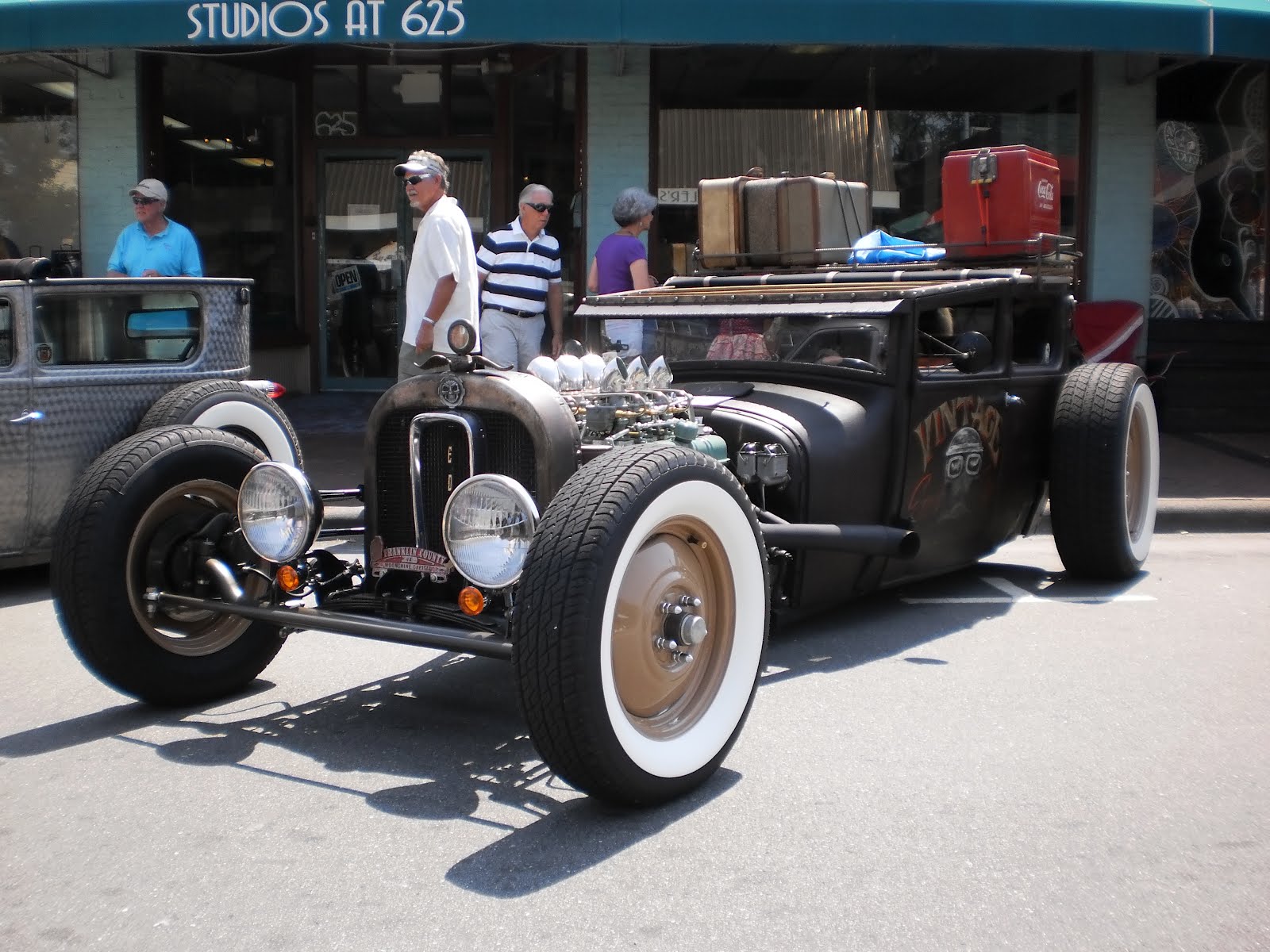
When we set up our booth at Heavy Rebel every year, it makes us damn proud to be able to talk on all the new projects, the great bands we work with and most of all to be able to hang with so many cool folks. This year was another scorcher of a good time. Whether it be wandering the streets checking out the rides, talking shop in our DIY booth lounge or just catching as many bands as we can, the good times are always at hand.
Huge shout out to Courtney, Dave and Mike for putting on such a great event and most of all to everyone that hung out in our booth or we shared drinks with. The list is long and strong, so to all of yall, cant wait for the next time around. Maybe next year we won't have to get keep getting kicked out of the hotel pool at 5am every morning either.
Mashable continues to have some of the best news reporting and breaking stories when it comes down to technology, social media and especially areas for which we as a whole, can use new tools to help leverage our online presence.
So you want to grow your band's following online or maybe even your own personal agenda, well here is what to do. Engage potential fans and friends every single day with pertinent information to make them feel much more involved with the growth of ideas. The way things are moving in a social function is that we all are in some form of engagement acting as voyeurs. We watch and enjoy others lives and activities from afar yet feel close to them due to how open the internet has made our lives.
Get off your lazy asses and make life happen, the world is waiting to view it 24/7.
"Was Instagram worth $1 billion? Will Google+ ever compete or beat Facebook?
Shiv Singh, global head of digital for PepsiCo Beverages and author of Social Media Marketing for Dummies, shared his thoughts on those trendy questions and more during his recent visit to Mashable to unveil Pepsi’s new celebrity-infused “Live for Now” global ad campaign and “Pulse” digital dashboard.
In a 10-minute interview with Mashable‘s editor-in-chief Lance Ulanoff, Singh commented about the launch of Google+, Facebook’s acquisition of Instagram, avoiding digital marketing mistakes, establishing a brand voice and creating a Twitter list for “regular people.”
Here are some highlights from the video above:
On Google+ (7:20-8:48): “I have immense respect for Google. … But I think they really messed up the launch of Google+. … They launched it as a social network whereas it’s something else and different to a social network. … They confused their user base.”
On Instagram (8:50-10:00): “I think Instagram was worth $1 billion because if Facebook did not get it Google would have picked it up or Apple would have picked it up or Microsoft would have picked it up and they would have been able to use it to throw darts at Facebook. … The service itself I do think it’s phenomenal.”
On integrating social media with marketing initiatives (0:33-2:04): “Social media is like air. It should flow through anything and everything and completely.”
On brands and celebrities using social media: (2:35-3:27): “More than the brands, it’s some celebrities that are harnessing social media. … A good example is Sofia Vergara from Modern Family. The way she connects with her followers on Twitter is so in sync with who she is that it’s like a drug. … I just want to follow her more and more and more.”
Sofia Vergara - The hottest woman on TV and maybe the world
How jealous are you of those viral video stars who rack up millions upon millions of plays on youtube? Oh yeah, you can play far better than them or maybe they have never toured and lived on $5 bucks a day per diem. Are they are smarter than you? In much simpler terms they figured out how to be heard. Maybe its a fleeting marketing pitch on their part, but it does work in certain regards, same as the Snuggie captured attention for a few months and became a pop culture phenom.
We can sit around with some cold beers or over coffee and talk ideas all day, on how to best get the word out to the masses. Don't forget the biggest piece of the entire puzzle, at any time. Write great music and the crowds will follow. Shit, how easy is that to say and still seem like great advice? The truth will set you free and in this case it boils down to leveraging talent, skill and plain ol' street smarts to be heard.
There is no exact path, except hard work and a dedication to your craft. If you truly believe that your music needs to be heard and this career path for which you were born to live, then bleed for it. Honesty and integrity are severely lacking in this "gimme" and disposable culture, which we live in now. Create something with a long a shelf life and truly believe in it, for that is just step one.
After hearing our diatribe, listen to Billy Corgan of the Smashing Pumpkins lay it down. Here is a dude that has been there and done that. Can you measure up?
"As guitarist and co-founder of the Smashing Pumpkins, Billy Corgan
was at the forefront of one of the most important music movements in
recent history. And he’s not finished. The Pumpkins have a new album
coming out in June, and Corgan is splitting time between music and
helping artists take back control from labels. He wants talented
musicians to have more lucrative careers and engage their fans. At the
same time, he’s calling on fans — who play a more critical role in
artist success than ever before — to invest in the artists they love.
Corgan, who’s no stranger to controversy, believes that the music
industry is currently structured to prevent artists from achieving the
type of success his band enjoyed. In fact, Corgan doesn’t believe the
Pumpkins could achieve the success they have, or anything close to it,
if they debuted now.
In March, Billy and I took the stage together at SXSW Interactive and for a discussion that sent a series of shockwaves
throughout the music industry. As he said in Austin, artists are
becoming much like sex workers — once you’ve scored a record deal,
“you’re just the fresh stripper.”
Sensationalism aside, his point is that both artists and fans must
assume responsibility for the future of music if it is to mean something
more than viral videos and hit singles. This is about engagement. This
is about sustained relevance.
While we were in Austin, we took some time to also record the season three premiere episode of Revolution."
For all of there nerds out there such as ourselves who dig understanding social media and where technology is heading, constantly keep in the back of your mind, video games. Now don't think of the adventure games that suck you into a time warp and make days go by where your identity then becomes something in the realm of DragonSlayer666 or CultOfAragorn. Rather think on the apps that you use on phones or with Facebook.
If you have seen the data on the use of apps and the amount of users, what is most compelling is how games are top of the food chain. We get hit up often about creating a Rusty Knuckles music app or one for the bands, but in all honesty, the traffic just isn't there. But, this is where a company such as Songster is taking things in the direction that Guitar Hero did a few years back. Their plan of attack is stupid simple. Pair up gaming and music to create mashups and let it reside in the world of Facebook. Read on it more below and see what ya think.
"Dr. Dre never had it this easy. Music-creation social site, Songster, launched at SXSW on Wednesday for the music portion of the conference. Songster lets you feel like a musician and mix various beats and vocals to make your own tracks.
To access the game, you need to sign-in with your Facebook
account. Songster lets users chose from rap, rock and alternative music
to mash together and create their own song. Users can share their
tracks on Facebook and connect with other Songster players. Players can
also use virtual coins to progress to bigger and better gigs. The
virtual venues can be selected from a cartoon map.
Songster is the first game by Atlanta-based startup, Mowgli.
Founder and CEO Marshall Seese, Jr. came from a legal background,
practicing entertainment and technology law for seven years while
balancing that with his own music career (Seese is a musician, too). He
combined his expertise in entertainment and passion for making music to
create Songster.
“As a musician, I’m really passionate about people connecting through music,” he told Mashable.
“So I wanted to enable anyone to make great songs, not just sounds.
Social gaming seemed like a great fit because it embraces user
creation.”
Players can step in the shoes of a struggling musician (as least
virtually) and work their way up the ranks of the music industry.
Players start by doing gigs at frat parties and eventually arenas —
depending on how well they do. Because music is so subjective, Seese
said, they plan to track the success of a song by how many “Likes” and
comments it gets rather than an AI component.
The feedback songs receive will translate to virtual record sales,
enabling players to progress faster through the game based on how
popular their songs become.
As more players join, the team at Mowgli can work out any issues and
add more features such as charts, which will be available within the
next couple of months. Players will be able to see how their songs
compare against their friends’ songs based on shares and “Likes.”
Currently, Songster is in beta but it’s open to the public now. The game is free for everyone. “Most song packs can be bought for in-game currency, which can be
earned by playing the game,” Seese said. “Only premium features and
unlocking things early costs money at this point.”"
All the signs are pointing to another huge cash influx about to enter the music streaming business. Rumors are that Microsoft is sniffing around to what is possible, even after their failed attempt with Zune. Spotify is making waves with their streaming service and Myspace is claiming to have their numbers rising due to "significant" improvements to their music player. Not sure if Myspace realizes it or not, but their interface still is way too busy. If Myspace were to die off or completely, revamp their approach with a whole new influx of ideas and potentially a new name, maybe they could shed their old skin and start anew. Sorry Justin Timberlake, not even your amazing SNL appearances can save your investment in Myspace, unless it has a game changing overhaul.
Is Pandora a patsy for the major labels? What about Last.FM, Rdio and the litany of others who have provided streaming services? Do any of them have a solid presence or unique aspect which we as music fans crave?
In terms of streaming music, many huge players are entering the arena and looking to compete with Itunes after the strides created by Spotify. Some will create a decent presence, but soon every major entity within social media will have some sort of proprietary music player, especially Facebook.
We honestly think this is the best thing for bands as a whole. Competition breeds a better system and forget your big box package stores for buying music anymore. Its all going to be digital or directly to fans from the bands.
Justin Timberlake and Lady Gaga on Saturday Night Live
"Three months after launching, Google Music hasn't lived up to expectations, CNET has learned. Google's managers have told counterparts at the labels that customer
adoption and revenue are below what they expected, according to multiple
sources with knowledge of the talks.
Google Music has been live for barely a full quarter, so nobody is
panicking. Google has yet to throw the full force of its marketing
muscle behind the service, and managers have told the record companies
that they are trying to correct certain issues. Still, the numbers are
low enough for some in the music sector to be concerned, the sources
said.
A Google representative declined to comment.
Google Music was supposed to be a music powerhouse. As a companion
service to Android-powered mobile devices, the service has a massive
potential user base. At the time of Google Music's November launch,
there were more than 200 million activated Android phones and
tablets.
If Google managed to convert just 10 percent of those device owners, it
would mean 20 million customers. Google Music sells downloads, and also
streams songs to users who store their music libraries on the company's
servers. The service sells tracks from a host of indie labels as well as
three of the four top major record companies. Google has yet to license
tracks from Warner Music Group.
Google campus in the bay area
Google managers have told label executives that the service will get a
boost once Google implements its hardware strategy, the sources said.
Google plans to start competing against Apple by building an array of
consumer devices.
Two weeks ago, The Wall Street Journal reported that Google is building a wireless entertainment system that will stream music throughout the home.
The troubled start for Google Music comes as the music sector shifts
attention away from downloads and onto subscription services, such as
Spotify, Rhapsody, and Rdio. These companies sell consumers access to
huge pools of songs for a monthly fee.
Handset manufacturers and network providers, such as Research In Motion, T-Mobile, Cricket, and MetroPCS have bolstered their music offerings.
Just last week, CNET reported that Microsoft has held talks with some of the record companies about creating a new digital music store that would serve owners of the
Xbox
gaming console as well as buyers of an upcoming Windows-based phone. The
parties have discussed the possibility of streaming music as well as
selling downloads.
Phones are important to the labels. They see a future where subscription
services offer unlimited access to music and the fees are wrapped into
phone bills. The thinking here is that this will make the consumer's
buying experience much more painless.
So is Google Music out of step with current music tastes?
The record companies didn't think so when Google first approached them
in 2010. The recording sector couldn't be happier that a company with
Google's money and marketing might would be taking on iTunes. Because of
Apple's domination of music sales, Apple has been able at times to
dictate terms to the labels.
Despite all the excitement surrounding subscription services, it remains to be seen whether these services are very profitable.
The music industry is still too much in flux to say who the winners or losers are"
It is now 2012 and the end of the world as we know it, is coming to an end in December. Ok, don't fret maybe the Mayan calendar was wrong and it is potentially just a shift in mind set, but in all reality do you have the power to appease the gods? Nah, why worry on it, so get your groove on with some of the finest guitar shredders out there today. Rory Kelly has been clawing his way up through the ranks for some time now while being in metal thrashers Intethod and after that with the southern sleazers in Crank County Daredevils. Rory's new self titled band is defining its own sound in the Southern Rock genre and many big guns have been taking note. It is just a matter of time before these compadres are seen far and wide as their live show seals the deal.
Here is also another interesting fact for you die hard metal heads. Ever heard of the Old Bridge Metal Militia? Well, Mike Kelly the drummer aka Pops, was part of that crew and a go to drummer back in the early 80's thrash metal scene.
Rory Kelly, Mike Kelly and Billy Miller are one heavy hitting power trio
Rory Kelly's new album out in May 2012, (Don't Shake My) Family Tree
"Blame it on the heady highs in the air that permeate the Black Mountains of North Carolina, but the state has produced an artist in Rory Kelly that will surely bring new dimension to the tour de force that is America’s beloved Southern Rock. Possessing a playing ability in league with prodigies, Kelly is a self-taught musician that picked up the guitar as a boy and cut his chops in the rural town of Marion. While his mother slung drinks behind the bar, Rory strummed alongside his father, drummer Mike Kelly, in a family dominated house band in a local music dive. Mike Kelly has quite the backstory in thrash metal as well, being part of the infamous Old Bridge Militia of thrash metal fame.
Tapped a few years later, first by heavy metal outfit Intethod and later by Asheville based sleaze masters, the Crank County Daredevils, who found success both in the US and abroad; Kelly developed a keen ear, and playing ability to match, for what would develop into an ever widening spectrum of rock n roll sensibilities. After the unforeseen dissolution of Crank County, in 2010 Rory Kelly began to hone his own dirty rock n' roll based signature sound and recruited his former musical partner and father Mike to form two-thirds of what would ultimately become their current band. Together they recorded, and Rory Kelly produced, what critics deemed a “swamp rock” sound in their first release, Better Than The Blues.
When demand for that record began to outweigh supply, Rory Kelly began to branch out regionally, playing live with a hired gun on bass and gaining footholds with venues and audiences throughout both the Carolinas. In March of 2011 they scored a coveted series of showcases with Texas Rockfest, which takes place in the heart of downtown Austin, Texas each year during the world famous South By Southwest music conference. Those showcases brought Kelly interest from endorsement companies and rekindled a connection between him and Rusty Knuckles, his former label from the Crank County days, that was in the midst of successfully developing its’ own niche signing renegade artists from within the ranks of southern sleaze. Summer ’11 brought more recognition to Rory Kelly as they were thrust into and embraced by the Southern biker circuit and a permanent bass player joined their ranks. Billy Miller, also a seasoned musician from touring gigs with Voodou and Super Sport, brought the final element needed to round out this dirty rock n' roll trio, forming a mercurial rhythm section with the elder Kelly to compliment the smoldering swagger of Kelly’s rock riffs.
The addition of Miller has brought a new dynamic into the band and, with that, an ever evolving definition of what Southern Rock means to Rory Kelly and how they intend to translate that to their followers. The new album is done and scheduled for release in late Spring of 2012, and has captured the interest of well-known NC radio personality Steve Blanton who will assist Kelly in the production of their second effort. Revealing a band edging toward a harder sound, (Don't Shake My) Family Tree, will be released to world-wide distribution through Rusty Knuckles with both US and European tours planned for early 2012 in support of the record."
Ever heard of the term synchronization? Are you in a band that likes to make money instead of eating Ramen at truck stops? Well, a dilemma may be on hand at some point if you are lucky, talented and willing to see how far you can push your music career. What if you happen to pen a song that is so damn catchy and the melody makes everyday folks want to sing along, yet you feel tormented about losing your artistic integrity. Quite the conundrum isn't it?
There will always be the individuals who talk on who sells out, or what is cool and what is the new buzz, but guess what, they don't pay your bills. Trends come and go, but careers can be made in an instant (don't ever forget that the Beatles were only around for about eight years). Remember that amazing lick you just whipped up on the guitar and recorded it with your iphone, what if you could get that out to the masses in another format such as advertising. This might help the Ramen noodle budget turn into sushi addiction while riding in a bus, compared to an old church van.
This is a slippery slope when it comes to what we term artistic integrity, but our popular culture is moving towards the diet of fast food compared to home cooked meals. So think on the decision about where your music goes and what company's advertising you might potentially work with. Did the Transplants write about hair care initially? Don't think so, but I hope they got paid well for the song.
Dig into the article below, re-posted from Time Magazine online and see what you think about having music and advertising working together. Would you as a band member be critical on the type of company who wanted to use your song? Or would you rather take a payout and put that money in the back pocket and start to work on the next batch of songs?
"Chances are you’ve heard indie singer-songwriter Ingrid Michaelson. But not on the radio. Or in a music video. And probably not from buying her album, or even downloading her songs from iTunes.
Instead, you might’ve seen an Old Navy commercial featuring the 32-year-old’s lilting “The Way I Am,” a song that seems almost too perfect for selling sweaters. Or the Google Chrome ad with an instrumental version of her song “Sort Of.” Then there’s the Mott’s Apple Juice spot, the Ritz Crackers ad and the Stand Up to Cancer commercial, all with Michaelson’s catchy, sunny single “Be OK.”
Those ads might’ve been broadcast while you were watching Grey’s Anatomy, One Tree Hill, Parenthood, Hellcats, Scrubs, Bones, The Big C, Brothers & Sisters, Army Wives, Pretty Little Liars or Body of Proof — all television shows, and all of them featuring Michaelson’s music. And we haven’t even gotten to the movies and DVDs that include her songs.
The ways listeners are discovering Michaelson, a skilled multi-instrumentalist and vocalist who writes unequivocally upbeat songs, says nothing about her exceptional talent but everything about the music industry — or lack thereof — which has become a dwindling yet evolving business in which ads break emerging artists and TV spots are music videos.
Last year, worldwide licensing revenue from synchronization — a fancy term for pop music in ads — hit an all-time high at $2.5 billion, according to Heartbeats International, a music-branding agency. The tangled relationship between popular music and advertising has evolved over the past decade. Many in rock ’n’ roll long believed that any artist helping to sell something was “selling out.” Today, our consumerist culture has fallen in love and married our most popular art form — and the old arguments about using pop music to sell a product don’t seem to matter in an era when profits for musicians have fallen away. The idea that licensing music is somehow different from selling music through iTunes isn’t taken seriously anymore.
Michaelson, who released her new album, Human Again, on Jan. 24, doesn’t seem worried about any of this. It was far from her mind in 2007 when Old Navy contacted her through her Myspace page and later decided to use “The Way I Am” in an ad. And most of today’s musicians are of the same mind-set.
“The hope when licensing your music is that a few people will like what they hear,” Michaelson says. “Then those people will seek out the song and buy the song and/or record and become a fan.”
In fact, she did exactly that — became a fan — when Volkswagen featured the late songwriter Nick Drake’s “Pink Moon” in 1999, in an ad that many in the industry saw as a game changer — and that some say was work of art in its own right.
“There are so many emerging artists. Very few of them endorse the philosophy that it’s selling out in any way,” says Josh Rabinowitz, senior vice president and director for ad agency Grey Worldwide. “It’s not even a part of their culture anymore.”
So why isn’t licensing music for advertising selling out? How did we get from Neil Young singing that shilling for Pepsi would make him look like a joke to pop musicians writing songs specifically for TV spots? As Americans approach Super Bowl Sunday, we’ll see a number of popular bands featured in ads — OK Go and Mötley Crüe, to name two — and likely a few emerging artists who a decade ago would have never considered being in an ad. Somehow, the line between pop music and advertising became blurry and then disappeared altogether. How’d that happen?
The Jingle’s Jangled Morning Almost a century ago, songs in commercials were recognizably distinct from popular music — even though tunes in both genres were often extremely catchy. The jingle was its own art form and had its own artists who realized, before science proved it years later, that melodies get lodged deep in our brains and don’t leave. What better way for consumers to remember your product?
While there’s some debate over the first jingle, many point to “Have You Tried Wheaties?,” a radio ad that aired on Christmas Eve in 1926. Sung by the aptly named Wheaties Quartet, a barbershop male group, the ad melodically asked, “Have you tried Wheaties?/ They’re whole wheat with all the bran/ Won’t you try Wheaties?/ For wheat is the best food of man.” The story goes that Wheaties executives had planned to discontinue the struggling cereal until they noticed that sales had spiked in areas where the jingle aired. After broadcasting the song nationally, Wheaties took off, and the first true commercial tune was a success.
By the 1950s and ’60s, jingles began morphing into full-fledged songs. “See the U.S.A. in your Chevrolet,” “If I were an Oscar Mayer wiener” and “Plop plop/ fizz fizz/ oh what a relief it is!” all became part of the American lexicon. But they remained distinct from what most Americans heard on the radio.
That started to change in the 1980s and ’90s, when now legendary jingle writers like Mary Wood started writing songs like “Everybody Needs a Little KFC” and “7 Up: It’s an Up Thing.” Those songs sounded like, well, songs. Peter Nashel, a composer at Duotone Audio Group in New York City, began writing music for commercials around that time.
“It wasn’t like the jingles from the ’60s and the ’70s,” says Nashel. “This was like the type of music you’d hear if you turned on the radio or MTV, which at the time was exploding.” Musicians like Nashel quickly realized the money that could be made in scoring original music for TV ads, while others saw potential legal problems in the way the industry was evolving.
At the time, Nashel wanted his music to sound like whatever band was hot, but doing so required him to make sure he wasn’t bumping up too close to existing songs. That’s why the company hired guys like Matthew Harris, who studied at the famed Juilliard School of Music. In the mid-’80s, Harris couldn’t find a job teaching, but a new career was opening up: musicology.
As advertising agencies began composing songs for commercials, they started getting sued on the grounds that those songs sounded too close to existing tunes. In the U.S., a country with strong intellectual property rights and copyright protections, it’s fine if you’re a musician and want to cover someone else’s song. But if you’re using a song to sell a product or service, that’s a separate issue.
That’s where musicologists come in. Since 1987, Harris’ job has been to vet ad agencies’ music, a task that requires a vast mental library of songs and the judgment to determine when a musical resemblance creates a legal risk.
“Before I got involved, until just before the ’80s, a jingle was its own genre,” says Harris, who says he has evaluated more than 7,000 songs. “And jingles didn’t sound like pop songs. No one expected them to. They had too much information. They were telling you to take this, drink this, do that. They didn’t need musicologists in those days.”
But after about a decade and a half of sound-alikes — and some infamous and pricey lawsuits, including Bette Midler vs. Ford Motor Company and Tom Waits vs. Frito-Lay – ad agencies and companies had an epiphany: Instead of recording a knockoff, why not get the real thing?
Moby’s Play, Nick Drake’s “Pink Moon” and Napster In 1999 Moby released Play, an electronic-techno album layered with samples, gospel and house music. It was a mild success at first. Then he decided to license every track — all 18 of them. Suddenly, Play was on TV, it was in movies, it was in advertisements. Since then, it has sold 10 million copies worldwide and is widely thought to have obliterated, once and for all, the wall between popular music and advertising. At the time, Moby’s managers said they made a “conscious effort to create a marketing plan that had nothing to do with radio.”
“I think that by the time Moby did it, it was almost like the floodgates had opened,” says Ray Loewy, composer and sound designer at Tonefarmer, another New York City–based agency that pens music for ads. “I just think the wave was already moving, and he had a really cool album out that everybody loved.”
The beginning of that wave included the Rolling Stones’ licensing “Start Me Up” for Microsoft’s Windows 95, Sting’s singing “Desert Rose” for a Jaguar commercial (while also appearing in the car in the ad) and the use of Drake’s “Pink Moon” in the Volkswagen ad.
Also in 1999, a little-known online music-sharing service called Napster debuted, and the industry was about to be transformed. Over the course of the next decade, rock and pop music sales fell by half, and Napster and other sites like it complicated things by planting the idea that consumers didn’t have to pay for music. Then iTunes debuted in 2003, MP3 players like the iPod spiked in popularity, and physical-CD sales plummeted as people downloaded individual songs for less than a dollar instead of buying entire albums. And many just pirated what they wanted for free.
All that money artists had been making needed to be recouped. But it still seemed relatively uncool for musicians, especially newer bands, to hawk products — until Apple changed things. In addition to reinventing the personal computer, the mobile phone, the handheld music player and the tablet, Apple’s Steve Jobs transformed TV advertising and the music industry along with it.
First featuring well-known artists like U2 and Eminem in its iPod ads, the company started including emerging musicians: Jet in 2003, Feist in 2007, CSS in 2008. Apple ads were suddenly the vehicle to break new bands, even becoming Billboard magazine’s No. 1 place for “Maximum Exposure.”
(MORE: Is Freddie Mac Betting Against the American Homeowner?)
“It’s such an overused phrase, particularly in my industry: Advertising is the new radio,” says Loewy. “Well, it kind of is.”
Write Something Happy! Lynn Grossman is the owner of Secret Road, an artist management and music service that represents unsigned musicians, including Ingrid Michaelson. She started with Secret Road about six years ago, when advertisers were discovering the magic of emerging artists.
Grossman represents two types of musicians: the ones who will allow their music to be in an ad if it’s a company they believe in or an ad they like, and the rest — which is most of them — who are actively trying to get their songs in any commercials. There’s a good way to do that, she says: Stay upbeat.
“We get approached by people usually looking for positive messages in songs,” she says. “Things like, ‘I feel good,’ ‘Life is great,’ ‘I’m the man,’ ‘I feel good about myself,’ or something about coming home or feeling at home. They’re all pretty similar.”
After getting a request, Grossman will either find existing songs from her collection of artists or guide musicians to write songs that the company wants. When Michaelson’s “The Way I Am” got picked up by Old Navy, it was no accident that clothing was in the lyrics.
“I think Old Navy actually looked for sweater,” Grossman says. Michaelson’s song has since sold 1.5 million copies.
Singing for Expedia, Singing for Allstate While Michaelson isn’t writing songs specifically for ads, some artists are. Matt Mahaffey is the lead singer of the Nashville-based pop-rock band Self. But you’ve probably heard “Expedia — dotcom!” rather than Gizmodgery, an inventive Self album recorded with all kids’ toys.
“They hired some nasally dude to do it now,” says Mahaffey of the jingle for Expedia, a travel website. “But I wrote that.”
Mahaffey writes compositions for movies, commercials and cartoons, and also composes pneumonics, which are essentially micro-jingles. Is it discouraging to him that he makes more money from three-second ad spots than from his Self work?
“Oh, it’s a bummer,” he says. “But I’ll get paid a lot more to do a 30-second commercial than for something with the band, and it will take less time to do it.”
An emerging indie artist can get $10,000 for a song for a 30-second ad, while bigger acts can earn up to $1 million. “You can’t do that with a major label,” he says.
Jason Wade views the changing landscape similarly. Better known for alt-rock songs like “Hanging by a Moment” with his band Lifehouse, Wade was approached by Allstate a few years ago to pen a song for one of its auto-insurance ads.
“I can remember it like it was yesterday,” says Wade, recalling when Allstate sent him a 30-second clip of the TV spot. “A friend of mine died in a car accident when he was 16, and when I saw the clip, I had this visceral reaction. I had my guitar, I picked it up, and it was almost like I was channeling something. The whole song took, like, 10, 15 minutes to write.”
“Our band started out in the post-grunge movement, and doing anything commercial was kind of a sellout. But it’s evolved since then,” he says. “If it was just about hacking a song out, I wouldn’t be interested.”
While Wade says he feels bad for emerging bands because it’s so difficult for them make a living now, he thinks advertisers are interested in just those sorts of musicians because they’re new and exciting.
In fact, the movement toward emerging artists has cut into the business for composers like Loewy, who has been writing music for TV spots for years. “I think everybody in my business would say there is much less work for people like us,” Loewy says. “What we do isn’t necessarily cheap.”
Original music written by people like Loewy, Nashel and Rabinowitz can cost $30,000 for a 30-second spot. And Loewy says fewer advertisers seem to be asking him to make knockoffs of existing songs. There have been too many lawsuits.
But composers like Rabinowitz are adapting; he’s constantly bringing in new artists and musicians that advertisers might want to use. “There’s been a migration from the record world into my world,” he says.
Has that migration gone too far? After all, indie-sounding songs have become almost commonplace in the ad world.
But maybe pop music and commercials are just a perfect match, and more similar than we thought. Michaelson’s commercial output certainly doesn’t appear to be slowing. Grossman says two more songs off her latest album will be licensed soon. And, she adds, “I expect a lot more to come.”"



 Image: Flickr,
  Image: Flickr,